2011 – 2012
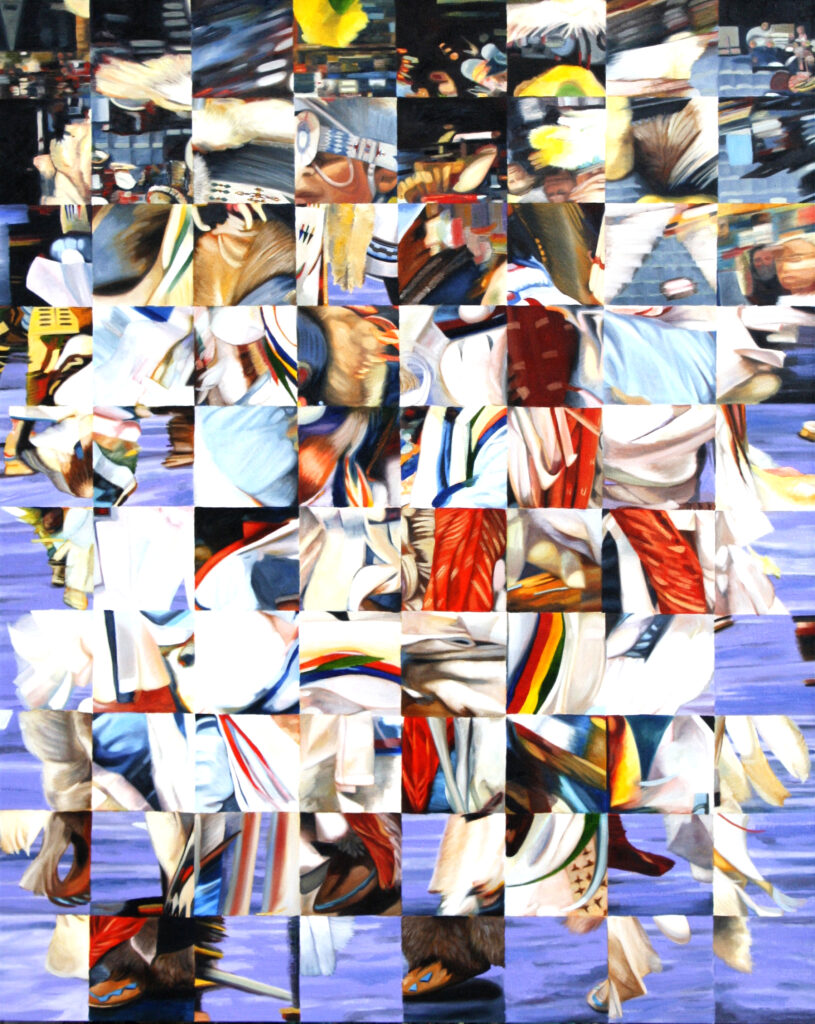
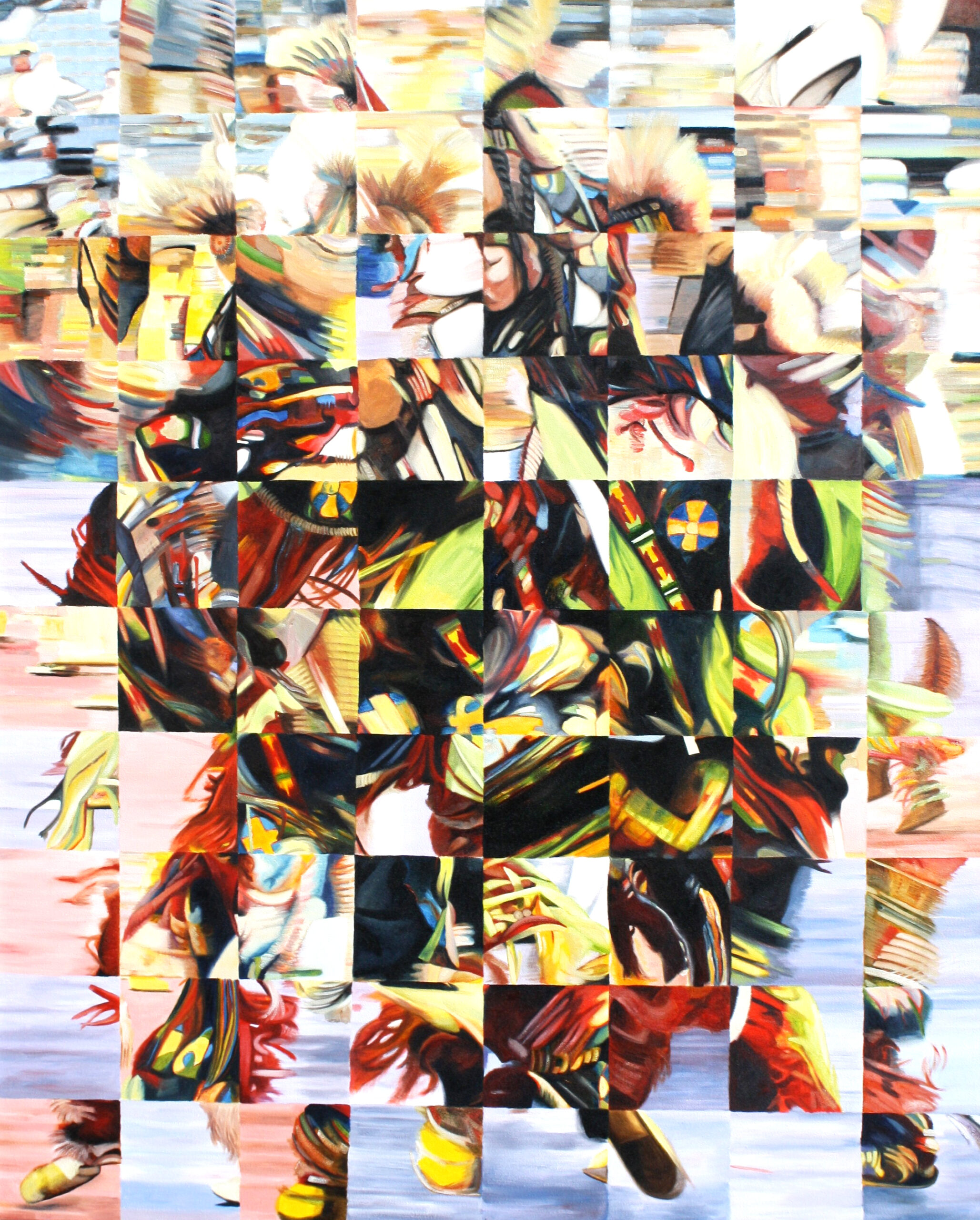
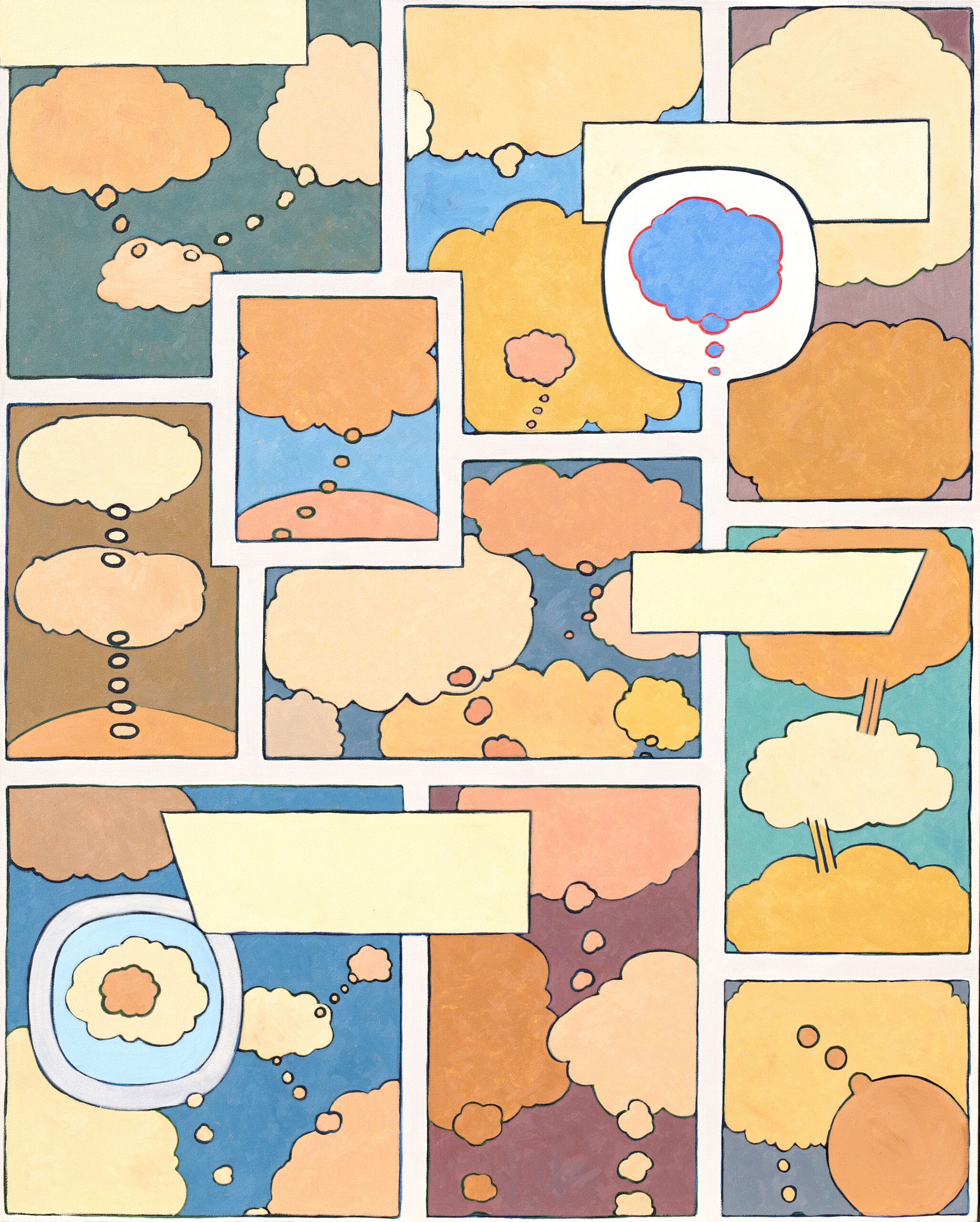
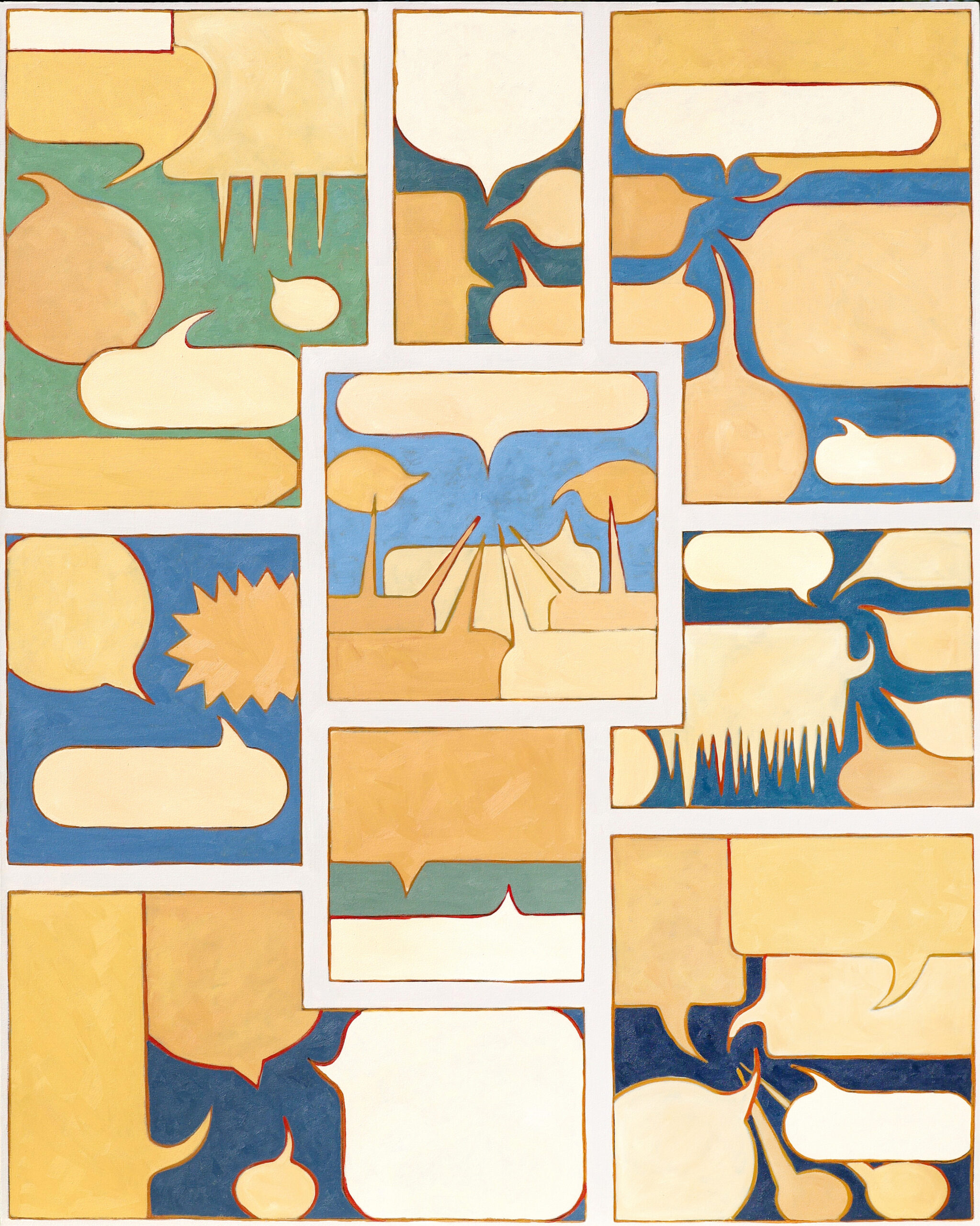
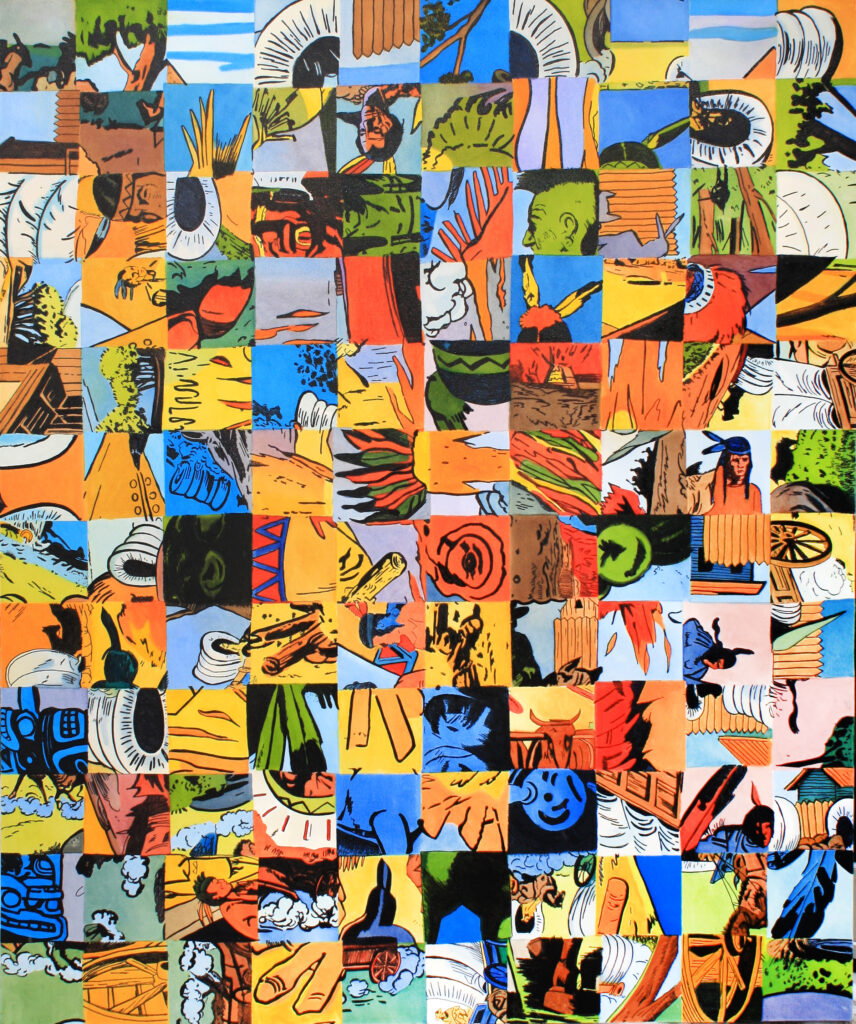
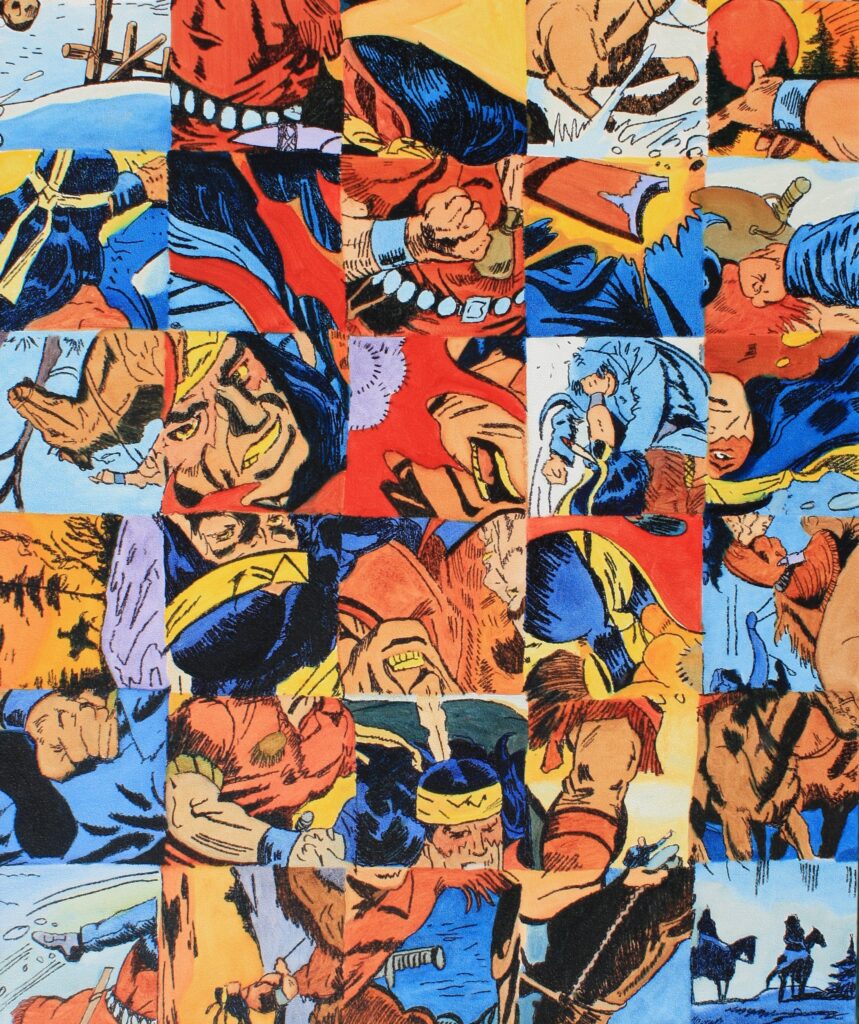
Quilts gather bits of everyday material culture together to make a new whole that is itself and yet also only a compilation of past things. They are like people. As a child, I was fascinated by quilts my Mum made from the family’s old clothes. Each blanket held intimate memory fragments of a generation: traces of our personal lived experiences and the tastes of that decade’s popular culture. I often lay in bed making up stories inspired by these collages. “The Hat Makes the Man” is a collage/quilt of mid-last century Classics Illustrated comic books that I read in my youth. The speech bubbles are left blank to encourage the viewer to make up their own stories. “Unsettling,” also based on Classics Illustrated comics, is a quilt whose playful design contains subtle narrative: the clash of Settler and First Nations—wagons ring the composition, hemming in the Aboriginal people leading to violence. These paintings suggest that popular culture forms early imaginations and our sense of history and self. The two “Dancers” are collage/quilts of a male pow-wow dancer. The fragments capture the movement over time and the sense of a pounding rhythm.
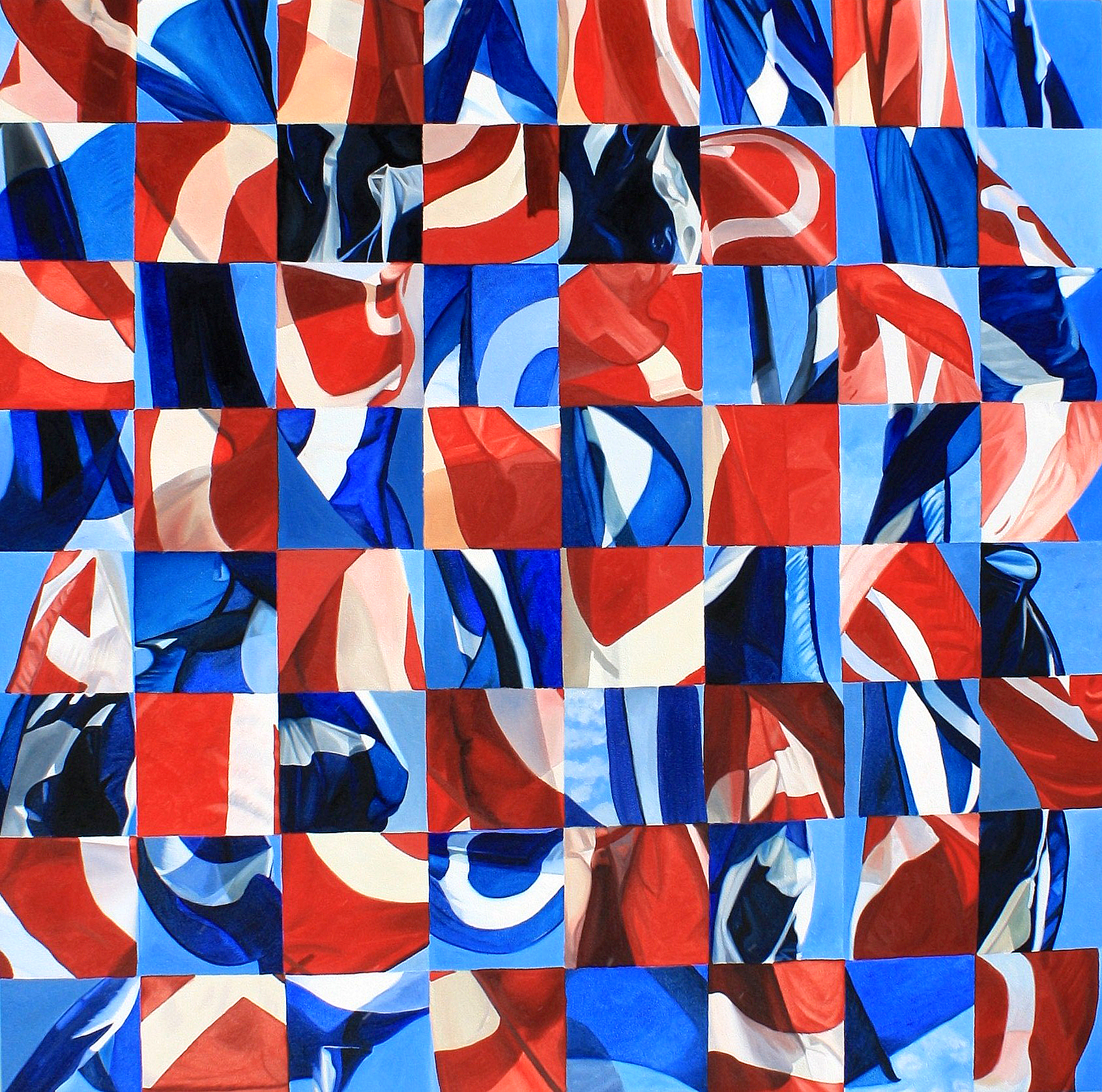
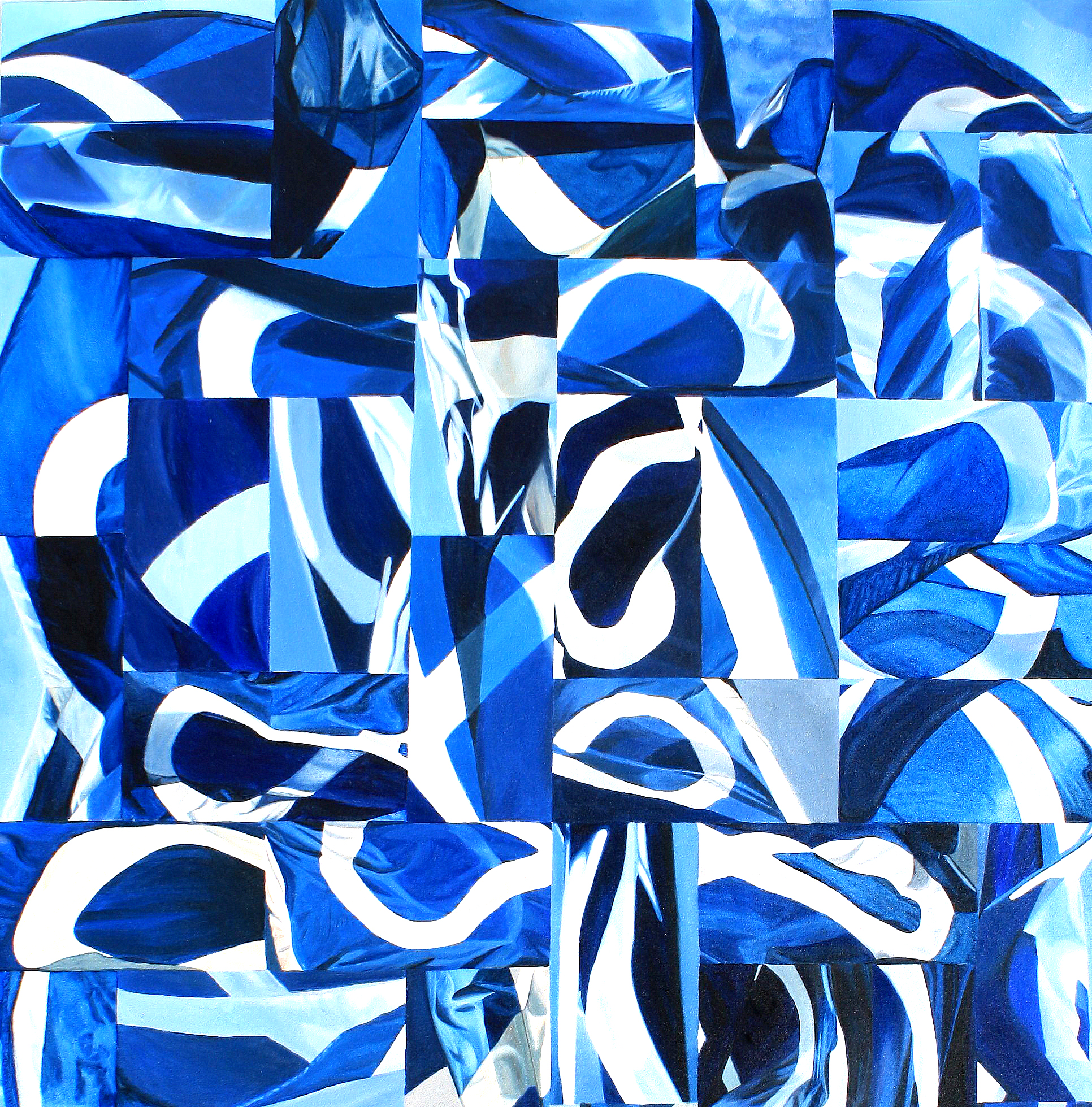
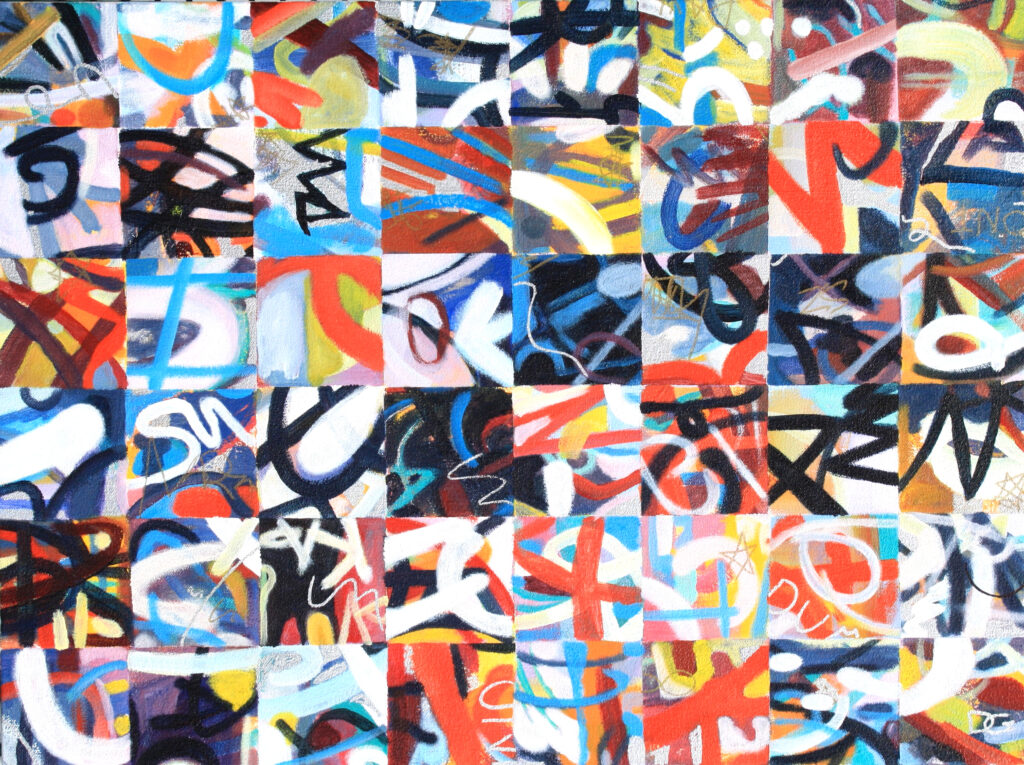
“Two Métis Flags (quilt),” belongs to a series of ‘quilt’ paintings I made between 2011 and 2015. I am interested in homey material culture, especially handmade things popular with Métis people as well as their First Nations and non-Indigenous neighbours. Quilts are complex, labour intensive, they often include shared labour, and are made from cast off things. Quilts are repositories of memories as well as bodies. They allow many different aspects to live together. Even opposites are housed in the quilt.
This painting features two aspects of historical Métis identity. While the flag goes back more than two hundred years, it came to prominence with the battle of Seven Oaks (1816). It is the most recognizable of the Métis symbols. The blue flag is associated with the Northwest Company (French-allied), and the red with the Hudson’s Bay (Anglo-allied). The white infinity symbol signifies perpetual harmony, and the joining of European and First Nations to create the new, Métis Nation. I wanted to make a quilt/painting that recognized the two European origins of the Métis. The quilt, like the flag, wants to show Métis are in relation, if not always in harmony. The motion is dynamic. The fluttering flags are in conversation.
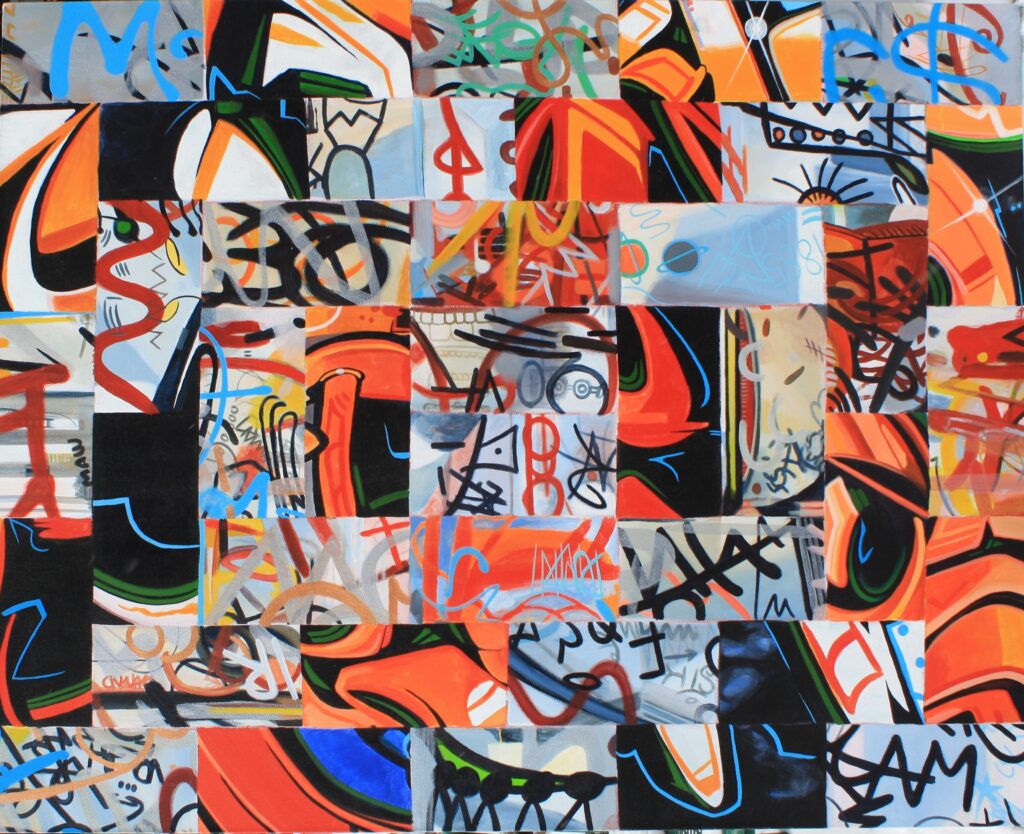
“Dancer I” and “Dancer II” are from a series of collage/quilt paintings. Quilts gather bits of everyday material culture together to make a new whole that is itself and yet also only a compilation of past things. They are like people. As a child, I was fascinated by quilts my Mum made from the family’s old clothes. Each blanket held intimate memory fragments of a generation: traces of our personal lived experiences and the tastes of that decade’s popular culture. I often lay in bed making up stories inspired by these collages. Over the years, I have tried various styles to capture dancers without full success. It is difficult to capture this time and motion in paint. The quilt/collage format allowed me to add sequence and time to the still images. The fragments capture the movement over time and the sense of a pounding rhythm.