DAVID GARNEAU

Writing

This section brings together all selected writings on contemporary art, exhibition practices, and Indigenous representation. The texts are also organized thematically and can be accessed through the menu under the following sections: “Accessibility”, “Art Exhibitions”, “My Art and Curation”, “Conciliation”, “Cultural Appropriation”, “Indigenous Art, Display, and Criticism”, and “Other Writing”.

“What do Artists Want from Science?”

“What do Artists Want from Science?”

I am not a scientist. So, the little I say here about science is likely to be either too cautious, incautious, or fundamentally wrong. That’s probably alright because this paper is not about science but about artists, their projections and desires, and the institutions that shape some of their practices. I am interested in the phenomena of so-called art/science collaborations. My thesis is that these partnerships are improbable if not logically impossible. Though touted by their host institutions as successes, the terms for evaluating achievement and proving it are unpublished—or might we say unconscious or repressed? These projects are more artistic and institutional wish fulfillment than viable possibilities.

L’Hotel Soficalle Vera Greenwood

L’Hotel Soficalle Vera Greenwood

Conceptual artist Sophie Calle made her reputation in the early 1980s by invading people’s privacy. She stalked strangers, and took a job as a chambermaid so she could photograph the rooms and belongings of the absent guests (L’Hotel). In La Filature she turned the tables, sort of, by hiring a private detective to shadow her. As an homage and subtle critique, Vera Greenwood went to Paris to follow Calle without her knowledge. The resulting exhibition, L’Hotel Soficalle, and small book, L’Hotel Soficalle: the Whole Story, documents Greenwood’s misadventures.

Unnatural Natives: Beyond Indigenous Idealism and Fundamentalism

Unnatural Natives: Beyond Indigenous Idealism and Fundamentalism

Native people and their land are interconnected. We have all heard this. The very definitions of the words ‘Native’ and ‘Indigenous’ bind bodies to specific places. Every First Nation, Inuit, and Métis Elder, Knowledge Carrier, and academic that I have read, listened to, and talked with about this subject not only agree, but recognize this as an essential truth. Leanne Betasamosake Simpson and Glen Coultard, for example, describe this web of reciprocal relations associated with a specific place as grounded normativity.

Symbolic Vessels. (“Joan Scaglione: Exposed Journey.”)

Symbolic Vessels. (“Joan Scaglione: Exposed Journey.”)

Great drawings thrill us because of their immediacy. They seem to be spontaneous physical forms of thinking or feeling. Because most drawings do not conceal their process, viewers can imaginatively retrace the evolution of the work as they can in few other art forms. And this sense of participation is increased by the fact that while not everyone sculpts, paints, makes movies, composes music, and so on, nearly everyone has drawn. Drawing, like storytelling, is an elemental human practice— a form of communication, therapy and magic.

Transits and Returns

Transits and Returns

Hello, Kimberley. I have an enduring memory of our first day in Norway last November 30. You, a tall Yorta Yorta woman delicate on the icy sidewalks of Kirkenes. Your usually confident stride minced by the threat of a slip. Métis from Amiskwaciy, Northern Turtle Island, now known as Edmonton, Canada, and now living in Oscana, Pile of Bone, Regina, I am more accustomed to winter. I felt compassion but had no remedy. Your uncertain steps caused me to reconsider conditions I take for granted.

Somewhere in Between

Somewhere in Between

A few years ago, Sean Woodruff Whalley and John Henry Fine Day noticed that their preferred sculpture mediums complemented each other. Sean works with softwoods and John Henry with raw hide. Both materials have a mellow blond colour. The artists also discovered a temperamental and philosophical resonance. They are interested in the complex interplay between people and nature. Sean, born and raised in Southern Ontario—once home of the largest broad leaf forest in the world, now a heavily populated, industrialized, and polluted area—is concerned with environmental sustainability, and John Henry—a member of the Sweetgrass First Nation—shares his Cree heritage’s belief in the interrelatedness of people, animals, spirits, and environments.

Settler Decolonialism and Indigenous Non-colonialism in the Visual Arts

Settler Decolonialism and Indigenous Non-colonialism in the Visual Arts

Most Canadians and Americans believe they live in post-colonial countries, independent since 1867 and 1776, respectively. However, First Nations, Inuit, Métis, and American Indians living in these same territories remain under imperial control. Their lands are occupied, not by Britain, but by Canada and the United States. There is a growing drive to decolonize art exhibitions, museums, universities, and most everything else. If these efforts are predicated on ideas and practices from states where imperialists have actually left, they must be re-tooled to be meaningful in places where settlers have no such plans.

Seeking Solidarity and Living Agreement: Disabled and Indigenous Artists and Curators Opening Access with Public Creative Institutions

Seeking Solidarity and Living Agreement: Disabled and Indigenous Artists and Curators Opening Access with Public Creative Institutions

Living Agreement was a gathering of artists and curators at the Banff Centre for Arts and Creativity (August 7-9, 2019) who were interested in reimaging relations with each other and with creative institutions. Social practice artist Carmen Papalia and Brandy Dahrouge, director of Visual Arts at the Banff Centre, designed the symposium based on Carmen’s recognition that art galleries disable non-conventional learners when their designs and programs are based on normative standards for minds and bodies, or on accommodation protocols that seek to group non-normative folks into comprehensible sets for easier management.

Rolande Souliere’s Sign Language

Rolande Souliere’s Sign Language

Each episode of Thomas King’s CBC radio show The Dead Dog Café Comedy Hour (1997-2000) closed with the line "Stay calm, be brave; wait for the signs." The program routinely poked fun at Indian Romanticism—producing with the spin of a wheel, for example, ‘genuine’ Indian names for lucky callers. And, yet, as with much of King’s comedy, uncomfortable truths lurked beneath the irony. Dead Dog often tackled The Indian Act, the legacy of the Residential schools, and the contrast of contemporary urban, Aboriginal identity and rez life—usually with the citified King as the butt of his own jokes.

Roadkill and the Space of the Ditch: An Artist’s Meditation

Roadkill and the Space of the Ditch: An Artist’s Meditation

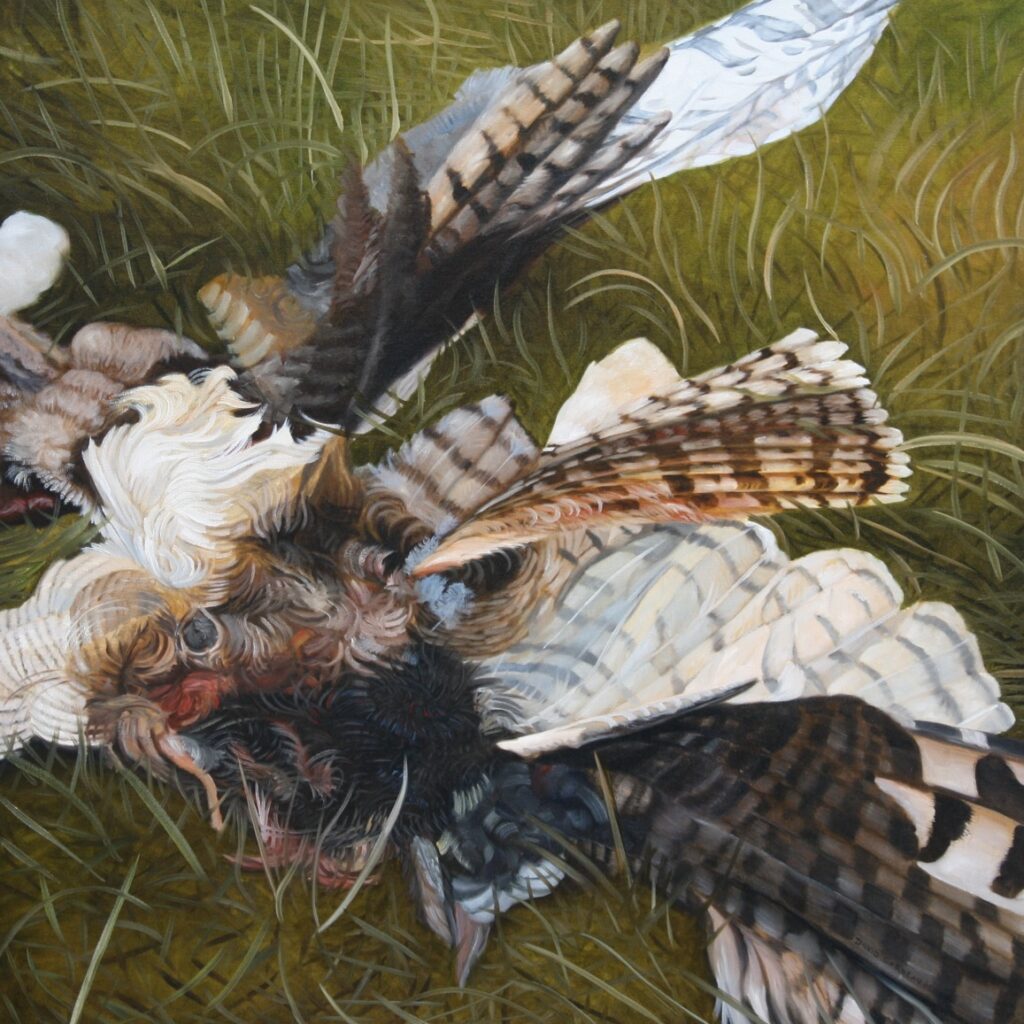
A hawk wheels above the ditch. The evening air is hot, the sky clear. Detecting delicate movement in the grass, its glide collapses into a sudden drop. Predator angles toward prey. Meters before impact, as it shoots across the asphalt, a van intersects its flight path. Flesh and fender, nature and culture collide. The ruined body caroms into the margin. Later, crows, flies, ants and others soon share in its reduction by particles. The day continues unconsciously.

Representing “Indians”: H. G. Gylde’s Rutherford Library Mural as Seen by a Métis Artist

Representing “Indians”: H. G. Gylde’s Rutherford Library Mural as Seen by a Métis Artist

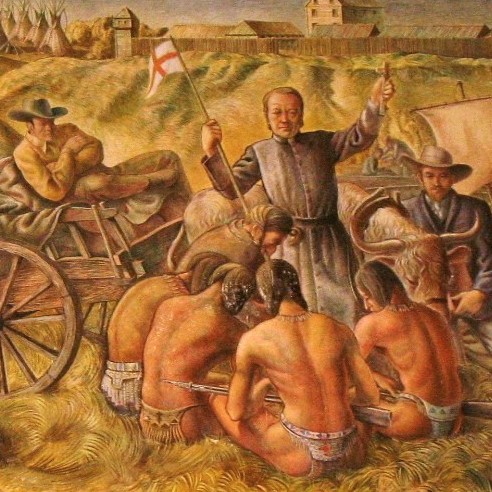
Henry George Glyde’s sixty-year-old mural, “Alberta History,” has been getting some attention recently—critical, but revitalizing nevertheless. Art lives only through the attentions of the quick, and these hungry ghosts are not fussy about whether the notice is positive or negative.

Remembering Moving Forward, Never Forgetting

Remembering Moving Forward, Never Forgetting

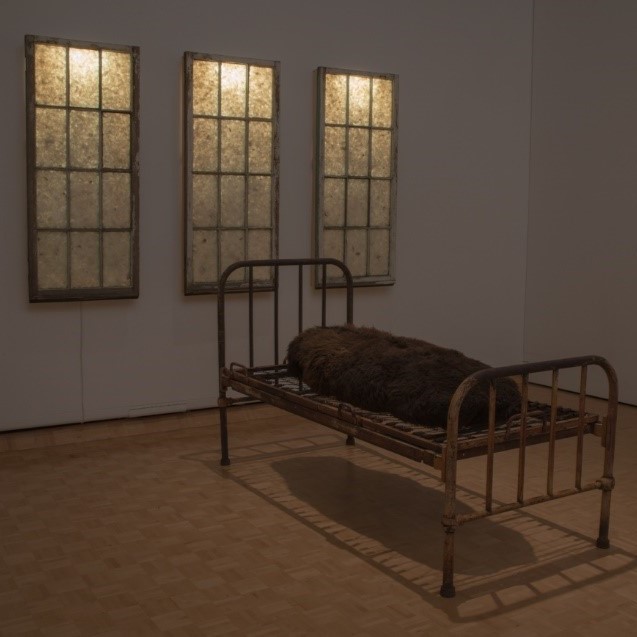
A small room in a large gallery houses a rusty bed frame, three decrepit windows and ghosts. As a young man, Adrian Stimson salvaged these relics from the Old Sun Indian Residential School during its renovation and repurposing. He wasn’t sure why they needed saving; he just knew they did. It was only decades later, after he became an artist, that he found new life for these haunted objects. The Siksika artist altered the artifacts to create a memorial, Sick and Tired (2004).

Non-colonial Indigenous Art Gallery and Museum Displays

Non-colonial Indigenous Art Gallery and Museum Displays

Art galleries and museums were never public institutions in the sense of “standing outside of the state and functioning as a means of criticizing it,” explains Tony Bennett. They were and are state organs designed to produce meanings that serve the needs of the nation and those citizens who most benefit from it. They perpetuate national ideology especially in the middle and professional classes who engage cultural institutions to learn what is expected of them. These publics go to absorb the cultural competencies necessary to reinforce and secure their social status and distinguish themselves from the working class.

Necessary Essentialism and Contemporary Aboriginal Art

Necessary Essentialism and Contemporary Aboriginal Art

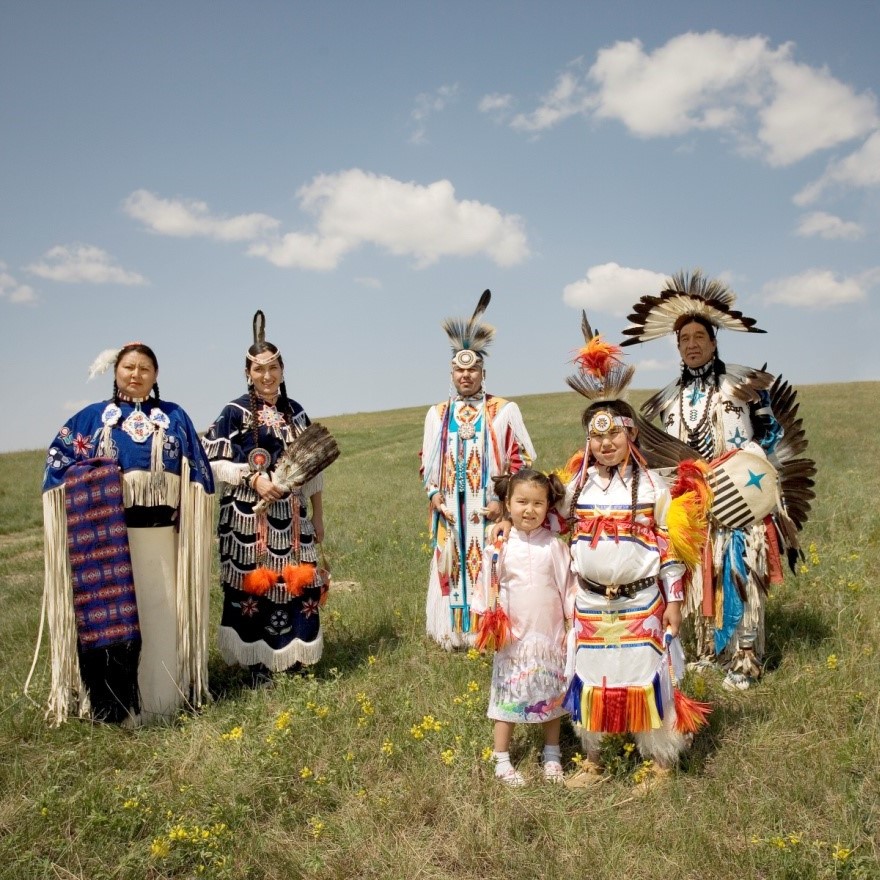
This photograph, by Terrance Houle, shows six people standing in full regalia on a hill of semi-arid short grass on a beautiful summer day. Saying ‘regalia’ rather than ‘Indian costume’, indicates a minimum level of cultural sensitivity, but not as much awareness as if I deduced their tribal affiliation from the beading designs. To do so would to be to read the picture as intended.

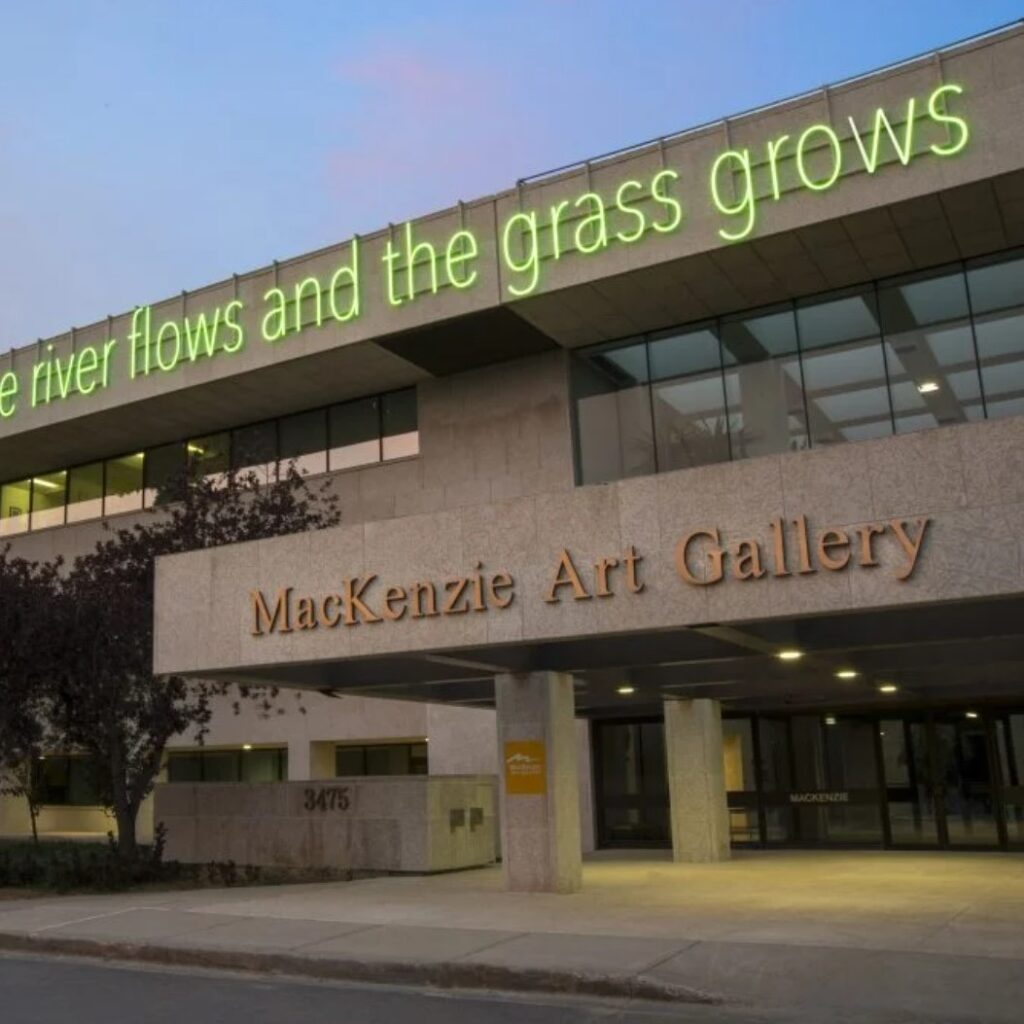
Mobile Structures: Dialogues Between Ceramics and Architecture in Canadian Art MacKenzie Art Gallery

Mobile Structures: Dialogues Between Ceramics and Architecture in Canadian Art MacKenzie Art Gallery

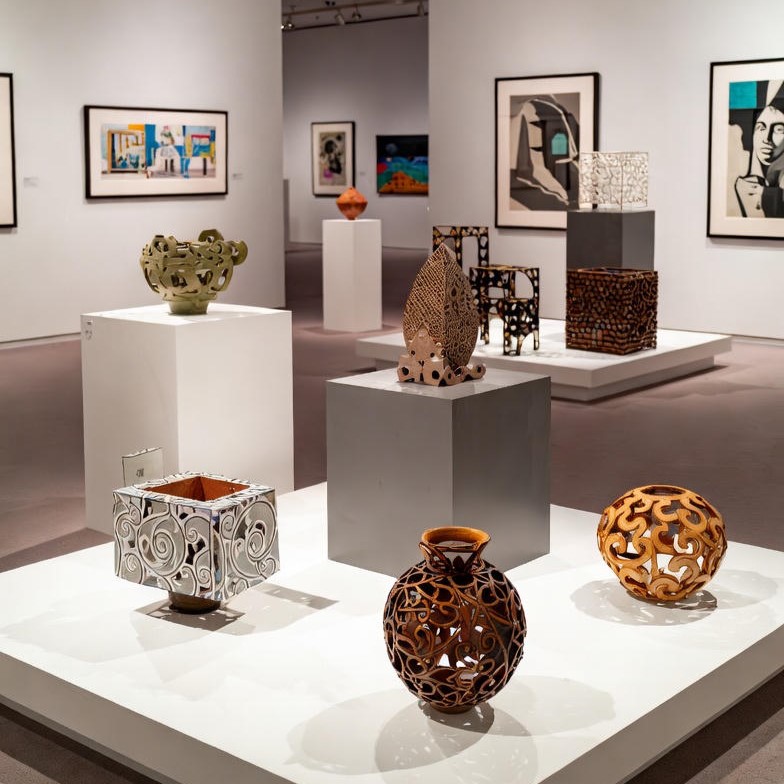
Art historians will some day designate the moment when ceramics saw itself as, and therefore became, art. While this event happened before Mobile Structures, the complexity and conceptual inventiveness of the works in this exhibition testify that the transformation has occurred and that, for ceramic artists, there is no going back.

Migration as Territory: Performing Domain with a Non-colonial Aesthetic Attitude

Migration as Territory: Performing Domain with a Non-colonial Aesthetic Attitude

De-, anti-, and post-colonial academic writing tend to concentrate on the political aspects of Indigenous being. While necessary work, prerequisite for our survival, without the counterbalance of critical creativity, the visions produced in this mode are incomplete, limiting, and aesthetically conservative. The centring of governance and power in Indigenous academic thinking is a totalizing project. It applies simplified abstract principles to complex real beings and things. It endeavours to fix and manage, understand and control.

Messages Beyond the Medium

Messages Beyond the Medium

Duchamp once said that works of art have a shelf-life of about a decade. Masterpieces might retain their validity for 50 years. I think he was serious. I think he was right, exempting, of course, his own work. It is the fate of successful art movements that, as the world catches up to their innovations, the individual objects lose their original power: the capacity to shock, to confuse in a meaningful way, to incite, to embarrass, to make you see – and even want to live – differently. Such works become museum pieces, exemplary, canonical, nostalgic.

Marginalized by Design

Marginalized by Design

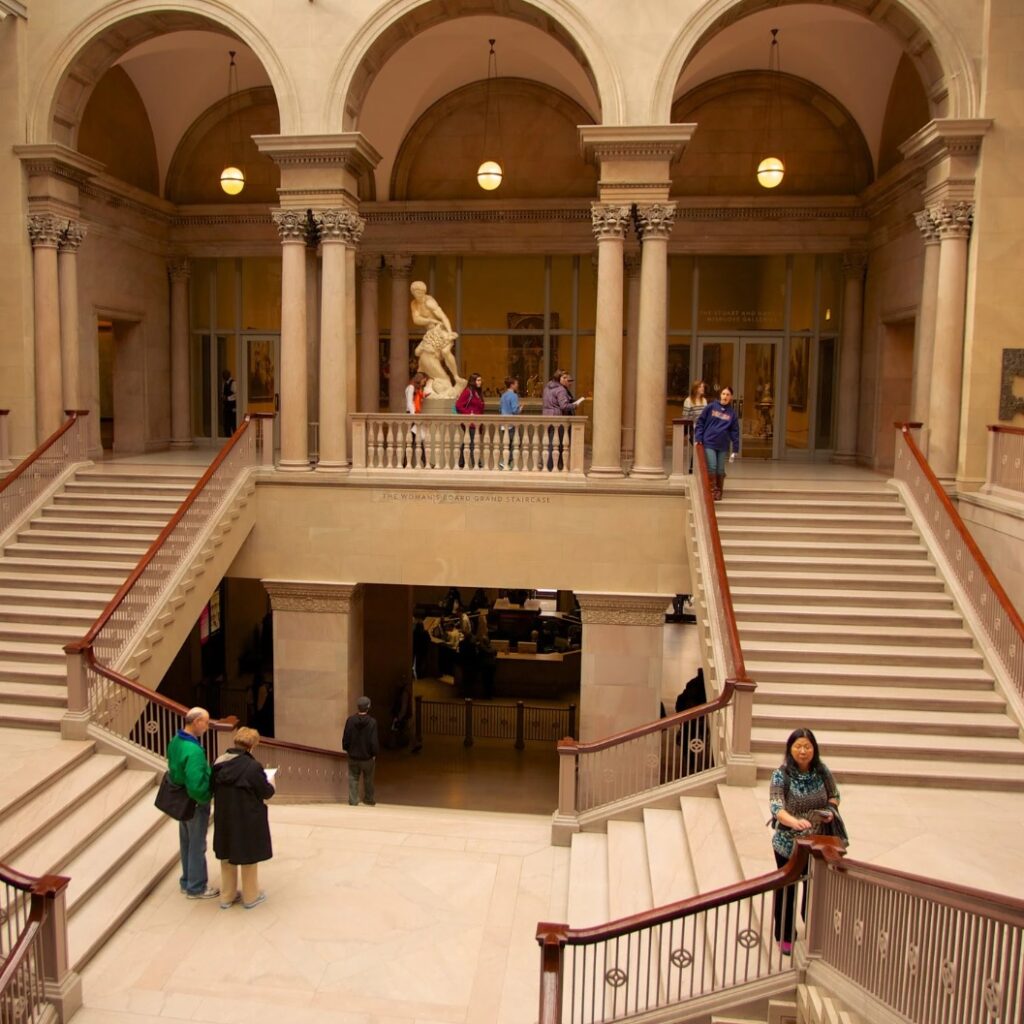
Aesthetic distance dissolved into carnality on a humid summer afternoon at the Art Institute of Chicago. I was seized at first sight by an urge to press my lips to those full, slightly parted ones. And, once the security guard ambled out of sight, I did. Of course, I wanted to kiss the beautiful person represented by the sculpture, but—for my teen-aged self, chaste by introversion but eager by design—this cool intermediary would do. But it didn’t. Knowing, and yet not fully feeling it until I tried it, the result of my Pygmalion performance was inevitable—erotic disappointment, a sense of bathetic absurdity, but also the excitement of breaking a rule.

Linda Duval: Resonating Images

Linda Duval: Resonating Images

In her exhibition, “Bred in the Bone,” Linda Duvall conflates two ways of picturing ourselves: conventional portrait photography and Magnetic Resonance Imaging (MRI). This pairing demonstrates the possibilities and limitations for each technology and highlights our desire to know ourselves through images.

Jennifer McRorie: Vanitas

Jennifer McRorie: Vanitas

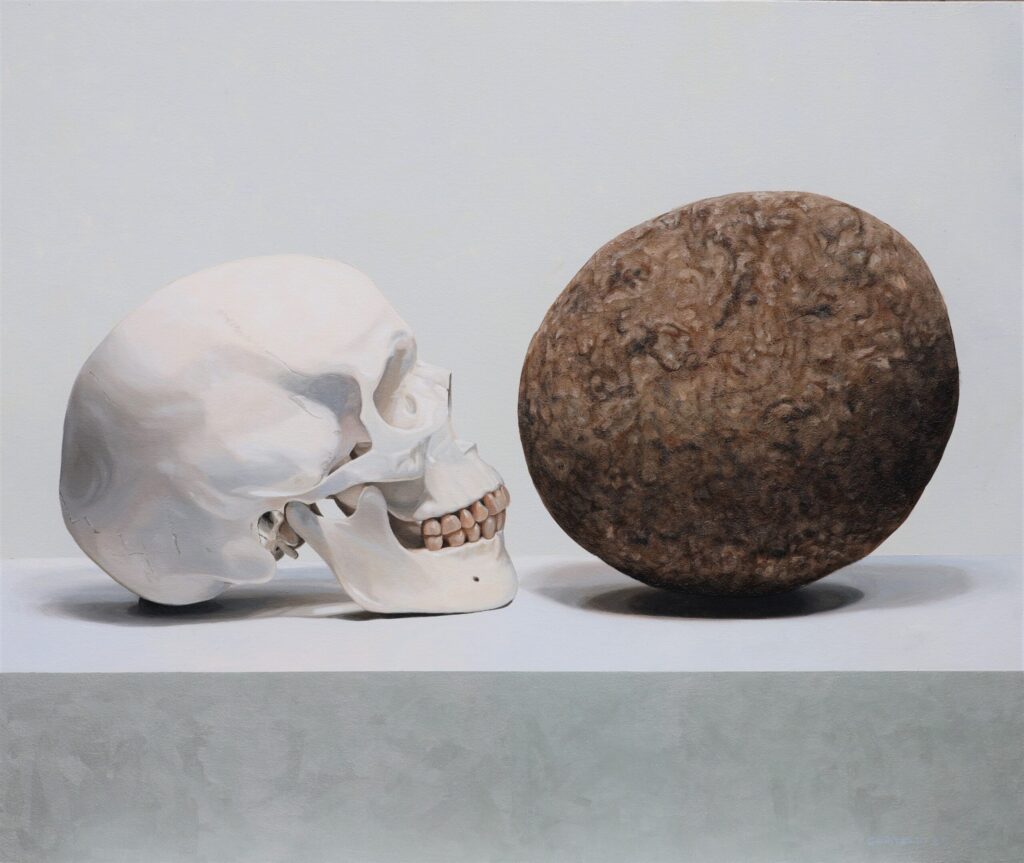
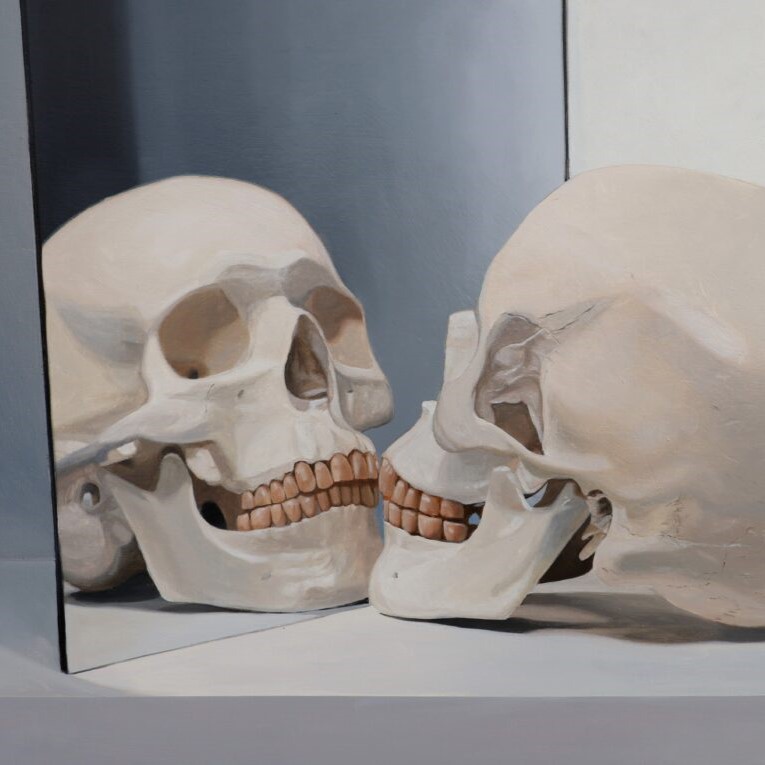
“Vanitas” is Latin for ‘empty’ or ‘worthless’. A popular genre among the 17th century Dutch, vanitas still life paintings brim with symbols expressing the transience of earthly pleasures and the futility of human achievement: flowers die, fruit rots, beauty fades. In less subtle visual lessons, empty sockets return the viewer’s gaze from a grinning skull, candles are snuffed out, sand drains from an hourglass.

Jennifer McRorie: Philosophy of the Flesh

Jennifer McRorie: Philosophy of the Flesh

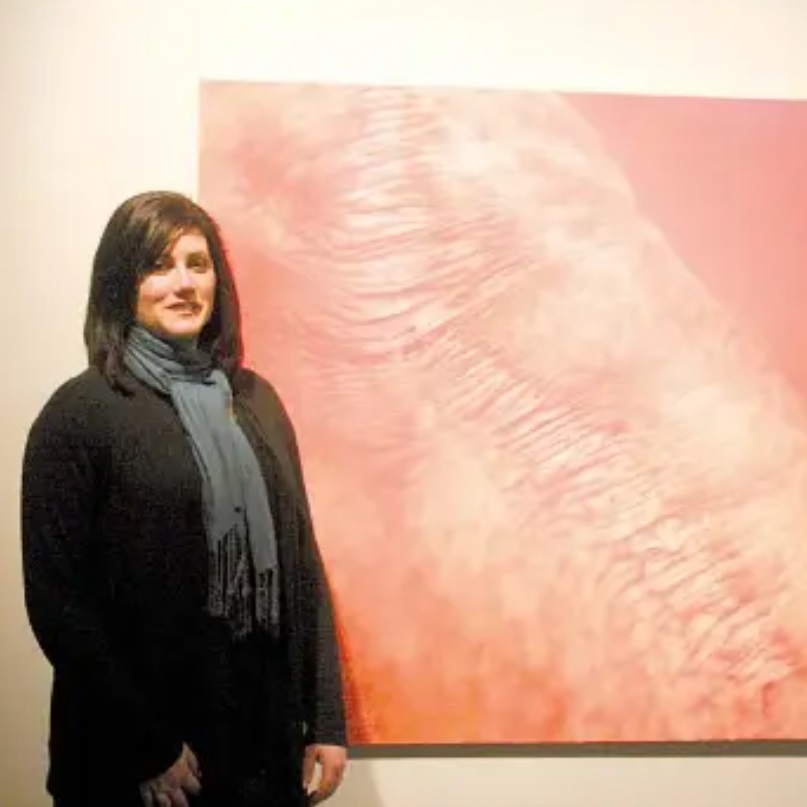
The gallery is lined with skin, twelve large paintings of naked, glowing flesh. Each magnifies a parcel of human veneer against a sliver of cool background. Warm figures swell beyond the picture-plane and threatening to press their raw, ambiguous bodies against the viewer. From a distance, the images appear photorealistic; up-close, they are abstract topographies. Though expertly rendered in sensuous oil paint, visual pleasure is arrested by a visceral disturbance; scars tear against the grain of each lovely surface.

“Insiders Out: Insiders In.”

“Insiders Out: Insiders In.”

One way to appreciate art is to enter a gallery without preconceptions. Avoid the labels and artist statements. Just look at the work and be open to the affect. Art critic Clement Greenberg famously used to cover his eyes, have a painting placed in front of him, then flash open his hands and absorb the rush of innocent visual experience: first impression, best impression. This method sees art as a pure communication between the artist and public through a sensuous object. The sensitive viewer luxuriates in the pleasure of the aesthetic moment before the contaminating world of judgment and desire rushes in.

Indigenous Creative Sovereignty after Canada’s Truth and Reconciliation

Indigenous Creative Sovereignty after Canada’s Truth and Reconciliation

The final report of Canada’s Truth and Reconciliation Commission begins: “For over a century, the central goals of Canada’s Aboriginal policy were to eliminate Aboriginal governments; ignore Aboriginal rights; terminate the Treaties; and, through a process of assimilation, cause Aboriginal peoples to cease to exist as distinct legal, social, cultural, religious, and racial entities in Canada.” The rest is footnotes—sober, thorough, harrowing, insightful, and moving descriptions of the mechanisms and effects of the slow, relentless genocide machine.

From Indian to Indigenous:Temporary Pavilion to Sovereign Display Territories

From Indian to Indigenous:Temporary Pavilion to Sovereign Display Territories

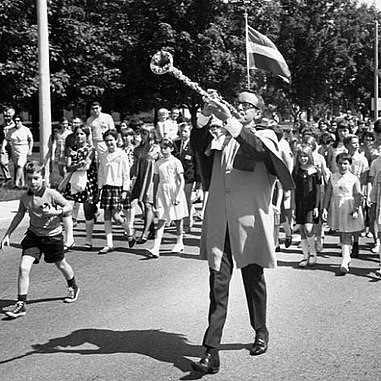
Expo 67: I was five years old, conscious of the hoopla, but we lived far from Montreal and could not afford the fare. The World’s Fair came to the Prairies mostly in black and white, on television and in the newspaper. The coincidental Canadian Centennial celebrations were more accessible. On Dominion Day eve, the ‘pied piper of Canada’ arrived in Edmonton. Bobby Gimby was a middle-aged white man who played a faux jewelled trumpet and wore a cape.

Imaginary Spaces of Conciliation and Reconciliation: Art, Curation, and Healing

Imaginary Spaces of Conciliation and Reconciliation: Art, Curation, and Healing

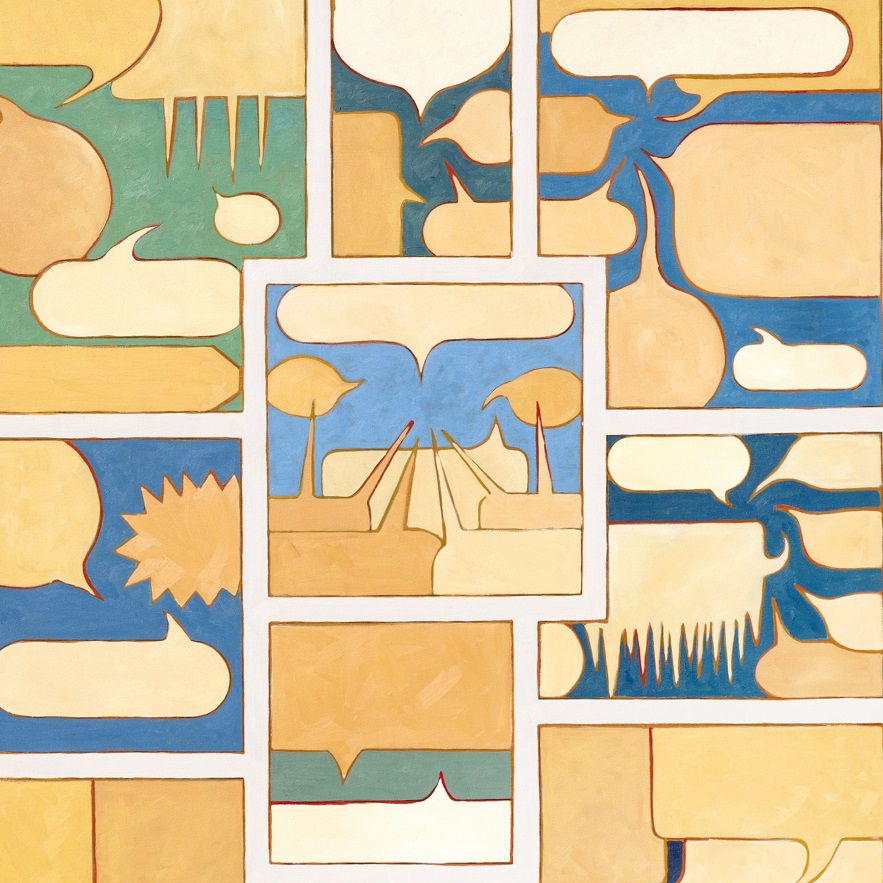
The oil painting “Aboriginal Curatorial Collective Meeting” (2011) is an attempt to picture my memory of an event without violating the privacy of those who were there. The canvas is composed like a comic book page. However, the panels do not show people or scenes and do not follow a conventional narrative sequence. They are arranged circularly without a clear beginning or end and are only populated by empty speech bubbles and the coloured spaces between them.

Images as Speechless Texts: Hawthorne’s Hypotypotic Veil

Images as Speechless Texts: Hawthorne’s Hypotypotic Veil

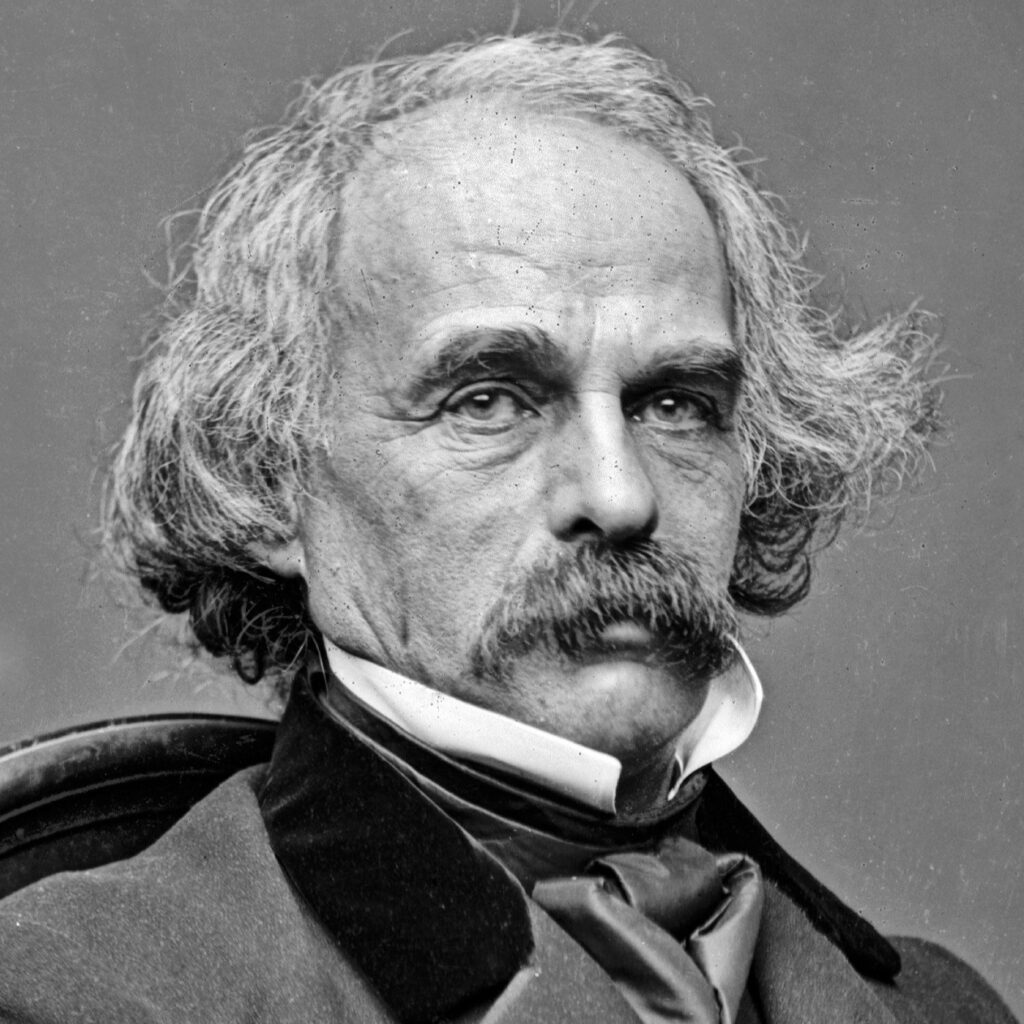
Coming from visual arts, painting, a field well tilled by semiotic readings, I hope in a small way to return the favour by surveying textual images for sights beyond signs. My project is to take hypotyposis literally. I will view uncanny mental images produced while reading Nathaniel Hawthorne’s “The Minister’s Black Veil” as though they were works of visual art. I see these images as a philosophically distinct species of art, untitled works.

Extra-Rational Aesthetic Action and Cultural Decolonization

Extra-Rational Aesthetic Action and Cultural Decolonization

For several years I have been disturbed by memories generated by three artistic actions: a yell by Rebecca Belmore as a prelude to a panel discussion; Guillermo Gómez-Peña’s threat to decapitate a woman during a work of performance art; and Terence Houle’s naked, fleshy belly in photographs and performances. Most days the images, sounds, thoughts, sensations and feelings engendered by these scenes course through my mind and body as a prickly trickle undisturbed by analysis. Other times, I slow the flow and attempt to discover why they stick around, what they want.

From Artifact Necropolis to Living Rooms: Indigenous and at Home in Non-colonial Museums (excerpts)

From Artifact Necropolis to Living Rooms: Indigenous and at Home in Non-colonial Museums (excerpts)

Replying to a colleague who was defending a friend, Winston Churchill famously quipped, ‘He is a humble man, but then he has much to be humble about!’ I resemble that remark. I am neither a museum curator nor anthropologist, not a PhD of any strain. I curate art, mostly Indigenous, in Treaty Four and Six territories. I am an artist who teaches painting and drawing at a regional university in Canada, Saskatchewan, Regina—the very trifecta of modesty. Ironically, in the inverted worlds of the contemporary museum and academy, where margins often centre, having much to be humble about can be a quality.

Necessacry Objects

Necessacry Objects

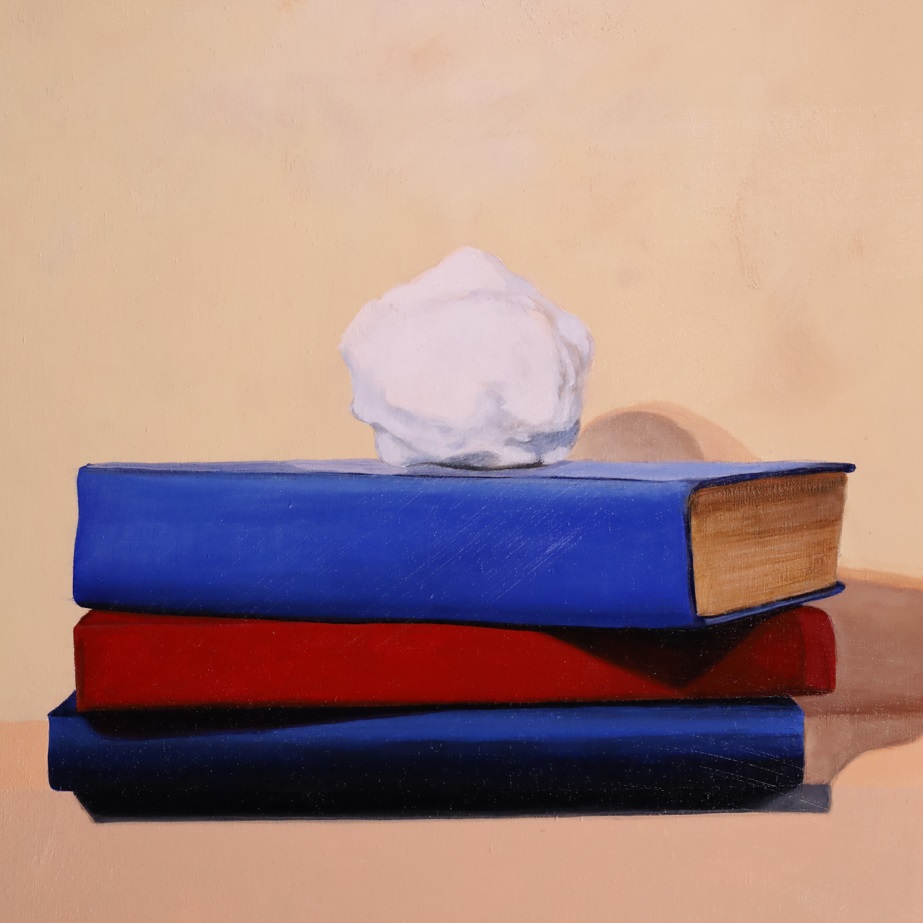
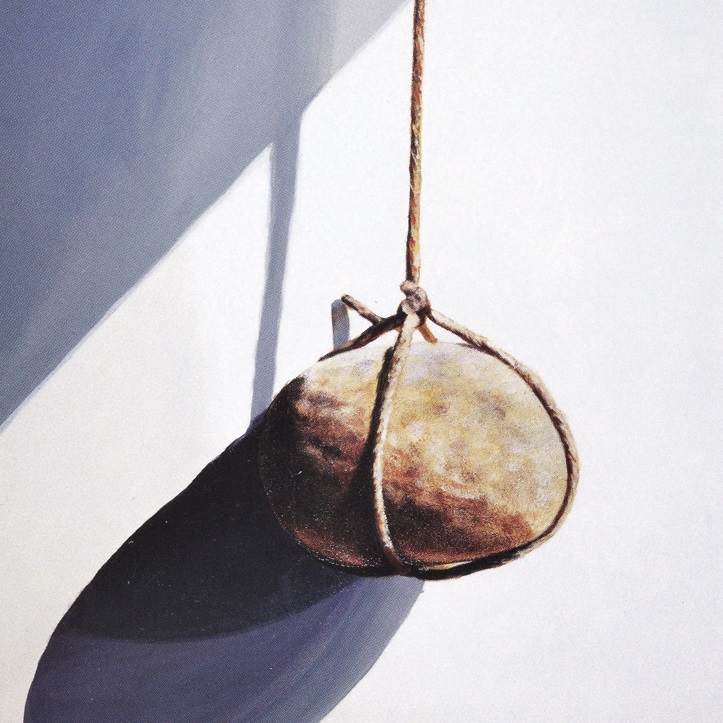
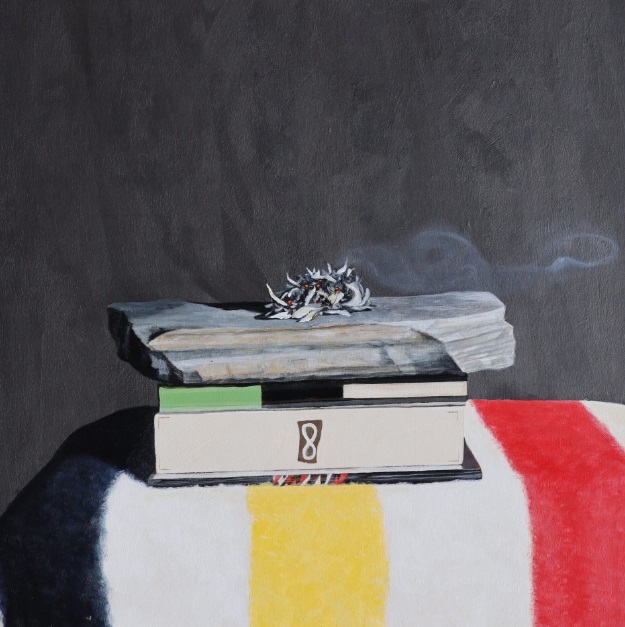
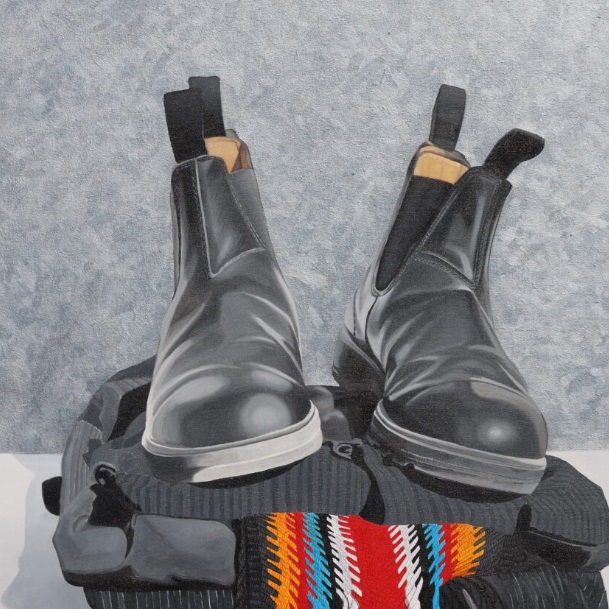
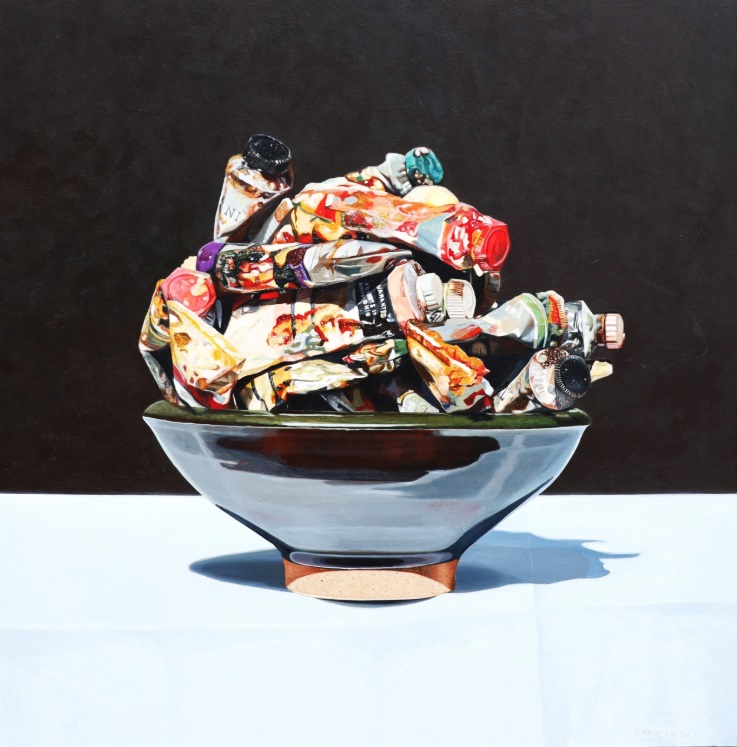
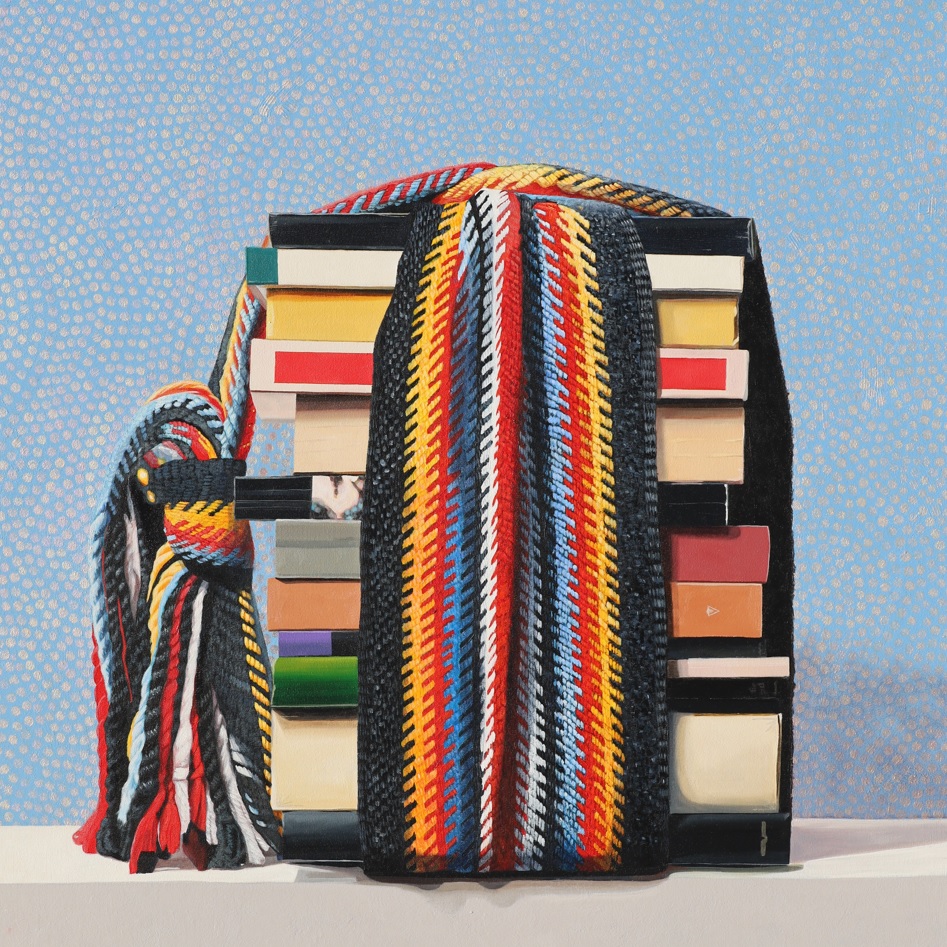
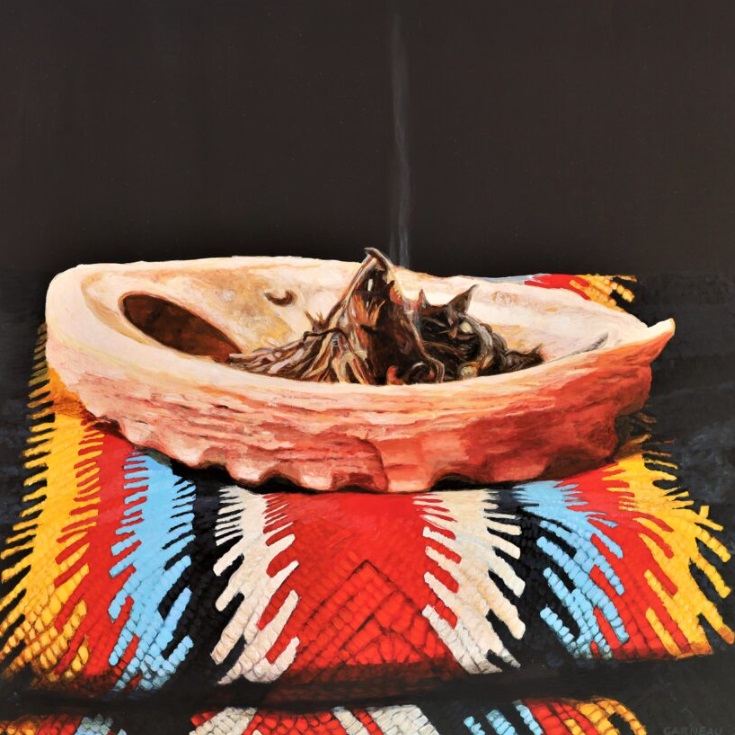
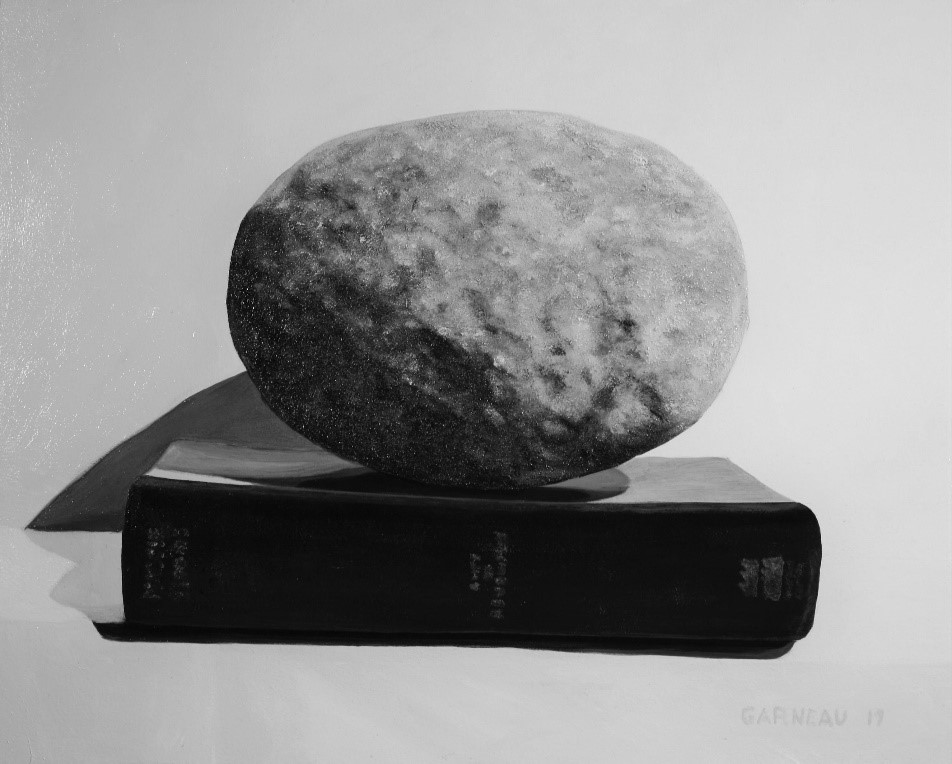
I have a love-hate relationship with painting. I grew up in Edmonton, which in the '60s and '70s was sieged by non-objective artists. I couldn't relate to that kind of work. Formalist, non-objective painting and sculpture still give me trouble. Those artists seemed more interested in avoiding the world rather than engaging and re-visioning it. However, as a Métis person, learning realistic or representational Western oil painting seems like a colonial activity. So I feel caught in the middle. I want to make work that is legible, rather than something that's merely for pleasure, escape, or is in a code known only to the community it rises from. My compromise is this new body of work: realist, still-life paintings coded with Indigenous meanings.

Thoughts on inappropriate appropriations

Thoughts on inappropriate appropriations

Not all appropriations are theft. Appropriation is the making one’s own something that belongs to another. Theft is misappropriation—the acquisition of property without either the rightful owner’s permission or a public sanction. People misappropriate cultural property because they are ignorant or assume that they can get away with it. It is currently popular to get tattoos from cultures not one’s own. Those who do so had better watch for Haida or Maori bikers!

“Fine Arts Faculties and Indigenous Futures”

“Fine Arts Faculties and Indigenous Futures”

I am speaking to you from Treaty Four territory. You are all familiar with territorial acknowledgements. They are important courtesies, but are often rushed, their weight and implications blurred by recitation rather than resuscitation. Given the nature of our conversation, I’d like to take a minute to deepen my acknowledgement.

Extra-Rational Indigenous Performance: Dear John; Louis David Riel

Extra-Rational Indigenous Performance: Dear John; Louis David Riel

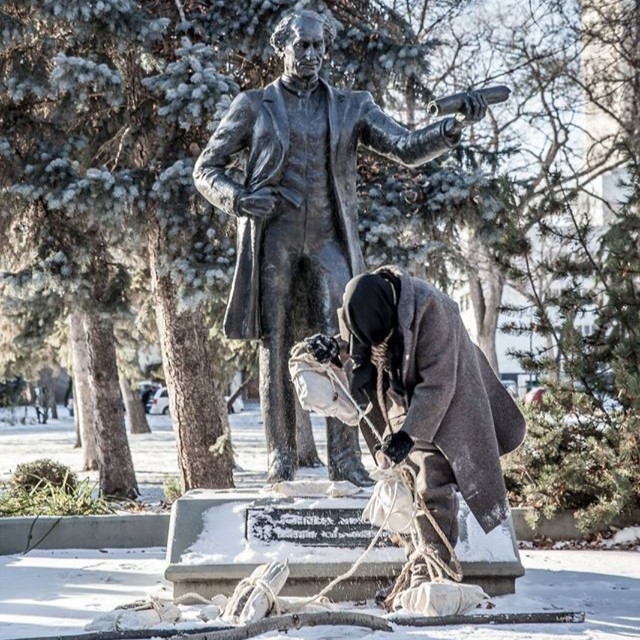
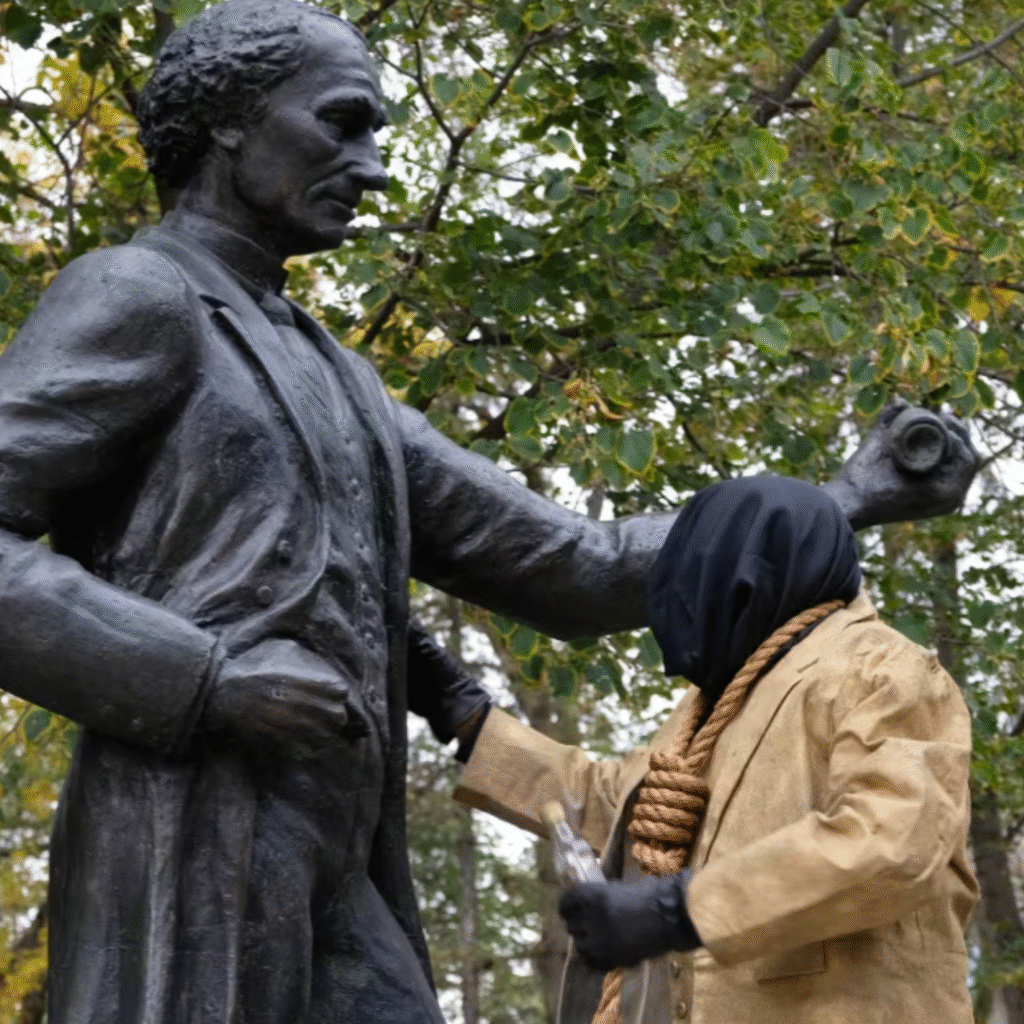
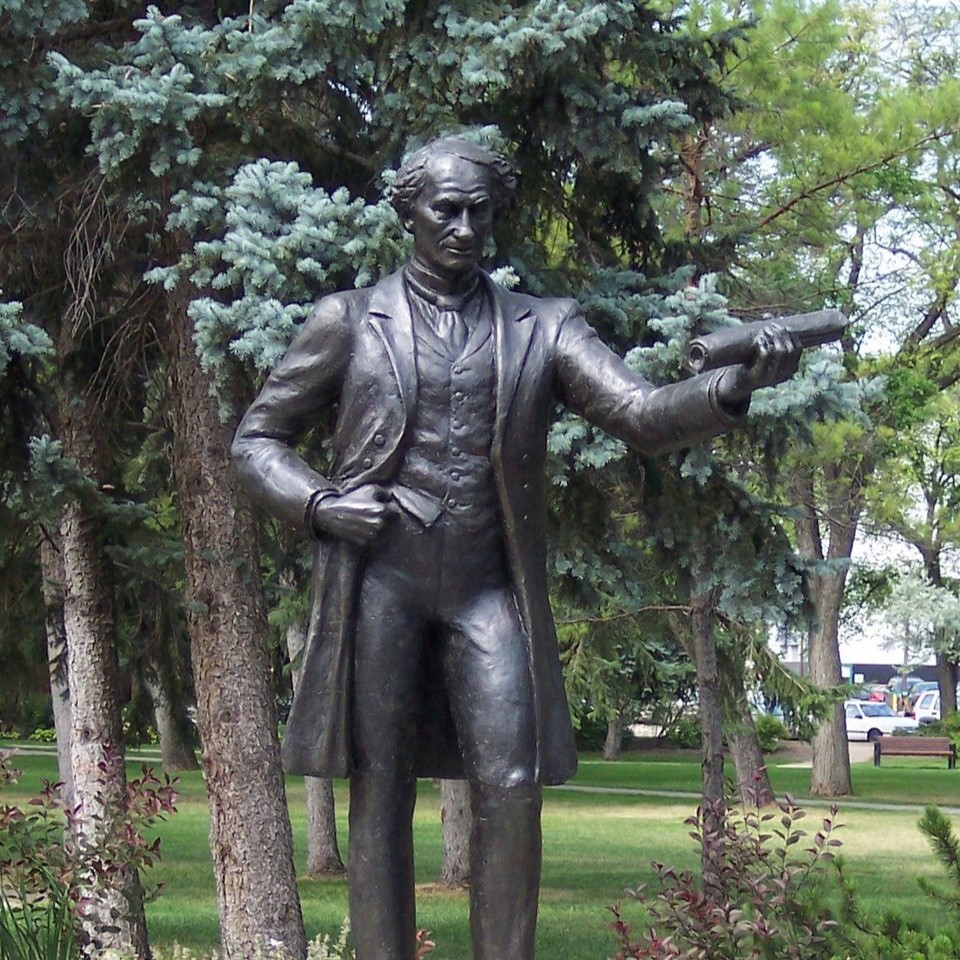
On a freezing winter afternoon in Regina’s Victoria Park, about fifty people gather at a sculpture of John A. Macdonald (1815-1891). Macdonald was Canada’s first Prime Minister. He also stewarded policies designed to subdue and aggressively assimilate the original inhabitants of Northern Turtle Island. These measures included: reserves; Pass laws restricting First Nations travel, trade, and political organizing; the Indian Act, which among other things, outlawed traditional cultural, spiritual, legal, and governance practices; and Indian Residential Schools, which separated children from their families, land, and languages, and were meant to extinguish Indigenous ways of being and knowing, and eventually title, from future generations.

Electric Beads: On Indigenous Digital Formalism

Electric Beads: On Indigenous Digital Formalism

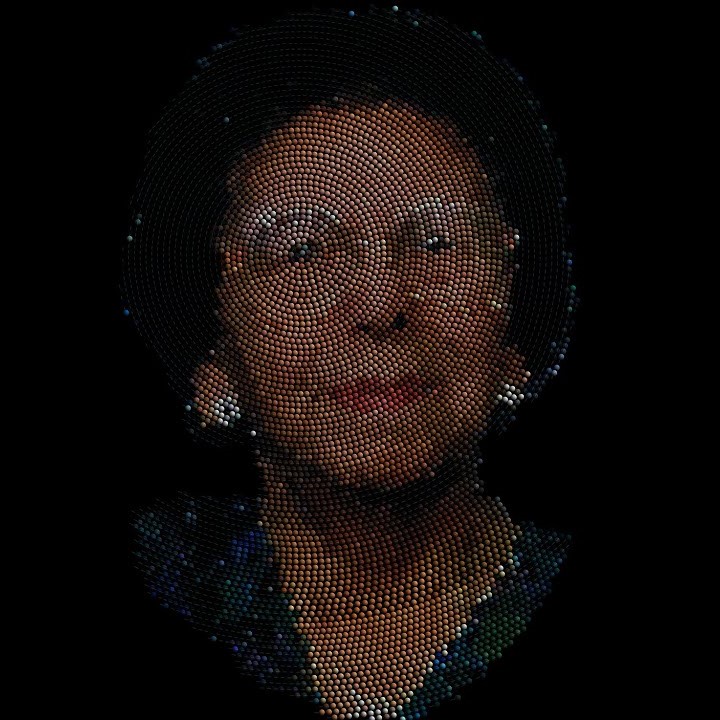
It begins as a small point of light in a dark room. A second glowing square quickly materializes, then a third, and in rhythmic succession at the rate of four a second a chain of thousands coils around the first and forms a spiral. Early on you wonder if the pixel colours are arbitrary or intend to picture. It takes several dozen silent beats of light before what might be a face emerges. Then yes, it is a face, a mature woman, she smiles.

Douglas Gordon: Filmic Re-Presentation(s).

Douglas Gordon: Filmic Re-Presentation(s).

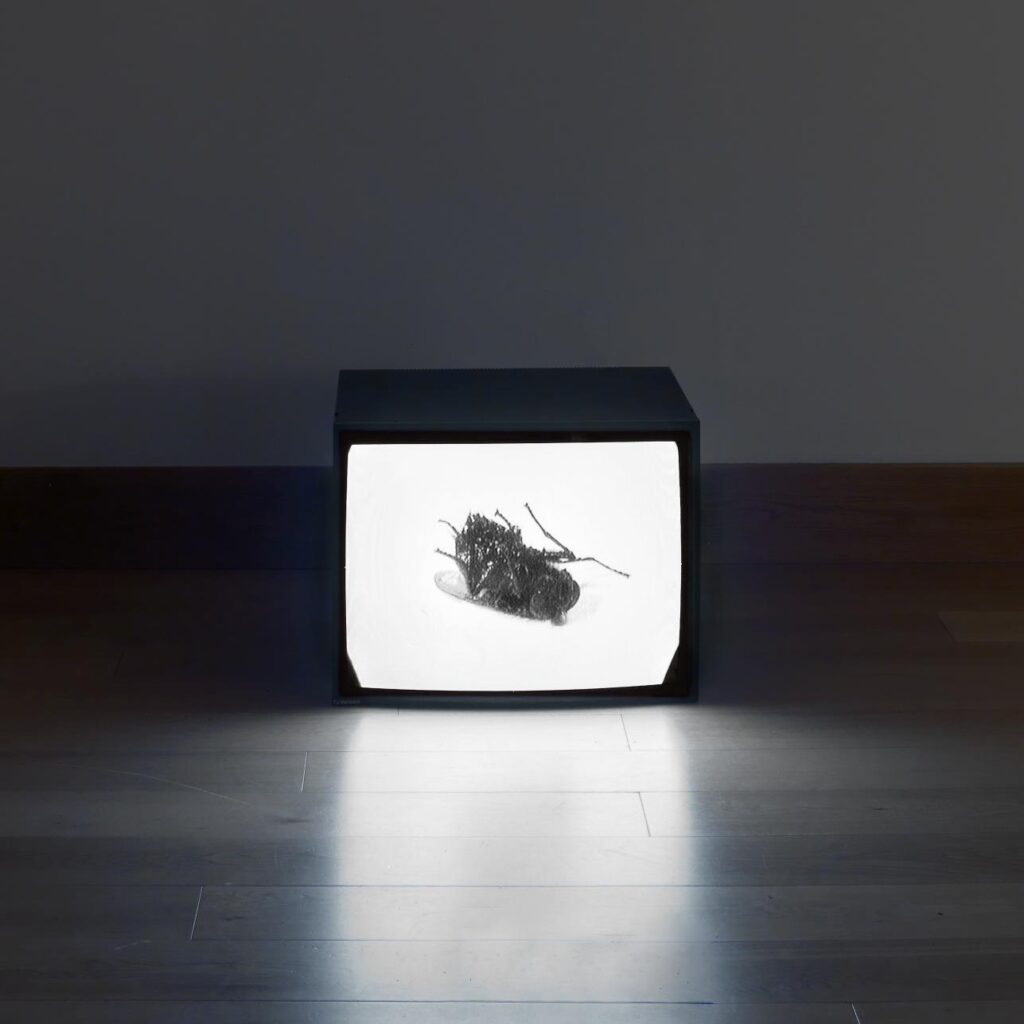
A little square of light levitates at eye-level before a black wall. Moving closer, the beam resolves into an image of an inverted housefly. Even before considering the picture, the viewer will be amazed by this spare illusion. While touch reveals the image to be flush with the wall, the eye remains unconvinced: the glowing square seems to hover at least four inches into space. The second surprise is a sudden movement. The work is not a miniature light box but a tiny video monitor. Every few seconds, in a futile attempt to right itself, the fly kicks furiously, then, just as suddenly, stops. That the struggle in this animated still life has no effect suggests that the insect is glued to the table.

Dhaka Traffic: Disabled by Design—an Allegory

Dhaka Traffic: Disabled by Design—an Allegory

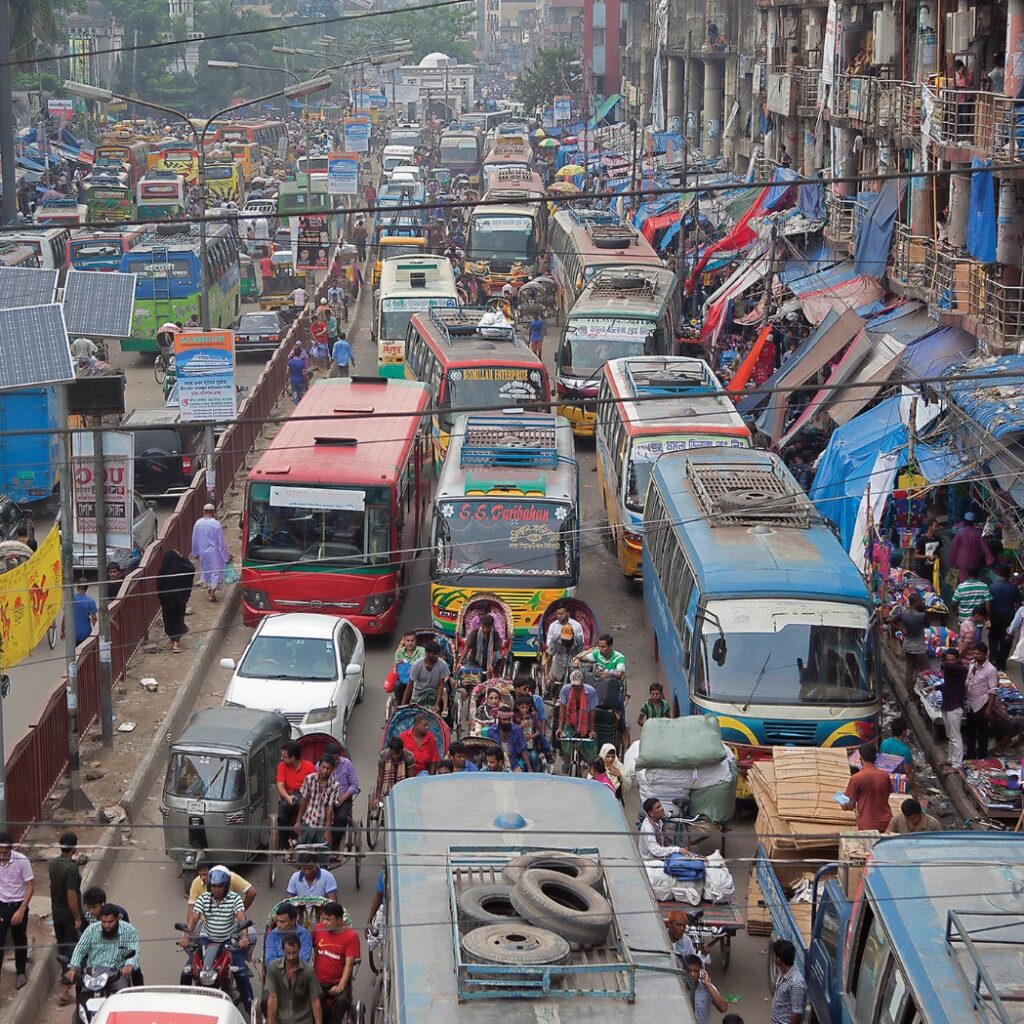
It’s been four years since I experienced the exhilarating yet numbing anarchy of Dhaka traffic. Picture streets dense with transport trucks, vans, cars, pedaled and motorized rickshaws threading a crazy quilt stretching to the blurred edges of one of the worlds’ largest, most populous, and polluted cities. Vehicles oscillate between aggression and diplomacy, their electric-quick negotiations produce a flowing tangle. Smell the sub-tropical humidity infused with sweat, cooking odors, and the acrid emissions of industry. Hear the horns, engines, and shouts.

“Contemporary Métis Art: Prophetic Obligation and the Individual Talent”

“Contemporary Métis Art: Prophetic Obligation and the Individual Talent”

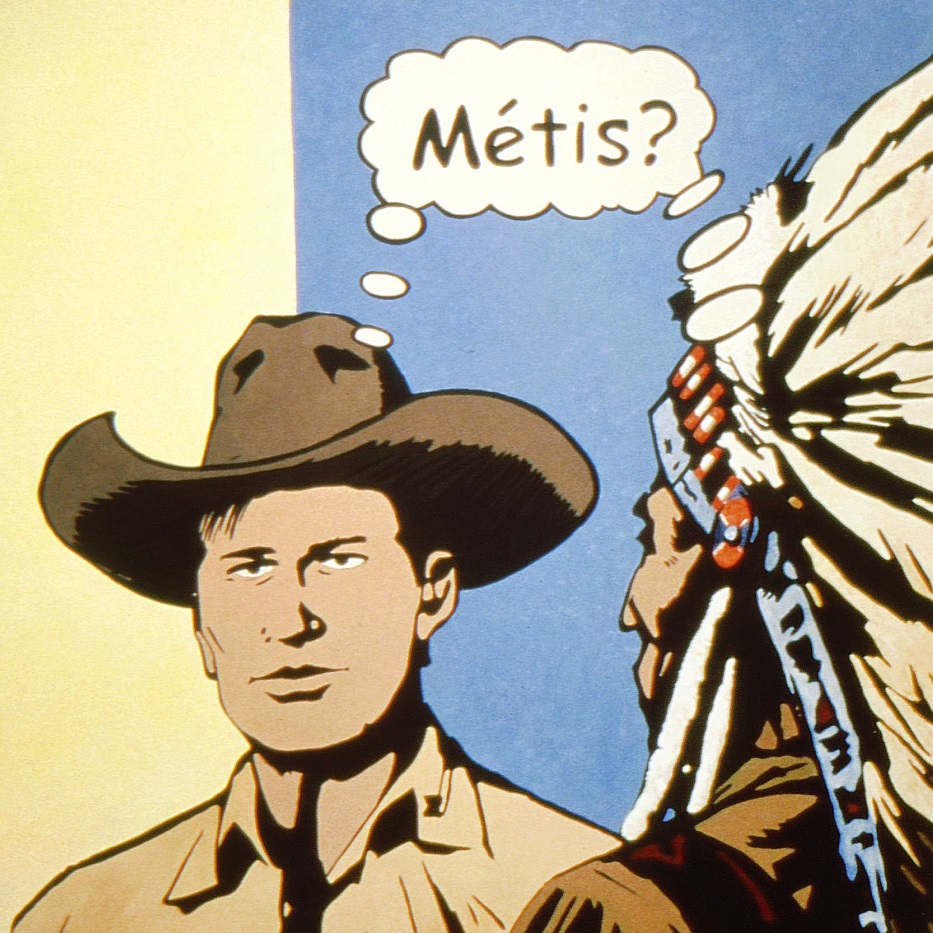
“Cross Addressing” (2002) is a painting of two men: one dressed as a cowboy, the other in comic-book-Sioux regalia. They share a common question and thought balloon: “Métis?” If both are, the image presents Métisness as an expanded field, one that includes seeming-cowboys and might-be-Indians. The picture also suggests that Métis appearance is not always easy to read, even for Métis. If either man is of mixed blood, they may be looking for signs of kinship to melt the ice.

From Colonial Trophy Case to Non-Colonial Keeping House

From Colonial Trophy Case to Non-Colonial Keeping House

My father, Richard Garneau, loved science and local history. He took us, his five kids, to museums, planetariums, and historic sites throughout Alberta and British Columbia. When I was 10 (1972), we found a very unusual object newly installed in the Royal Alberta Museum (Edmonton): a smooth but dimpled slab of brown iron that seemed neither quite human-made nor natural.

Can I Get a Witness? Indigenous, Art, Criticism

Can I Get a Witness? Indigenous, Art, Criticism

“Indigenous” is an emerging identity that extends and adapts First Peoples’ ways of knowing and being to the contemporary moment and to spaces beyond our home territories. Natives from around the world – enabled by advancements in communication, transportation, government policies, and funding, and driven by a sense of urgency arising from degradations to our persons, our sovereignty, and our environments – are connecting with each other to produce inter-National networks and a collective consciousness. Art is part of this movement.

Indigenous Criticism: On Not Walking with Our Sisters

Indigenous Criticism: On Not Walking with Our Sisters

Last November 24th, in Saskatoon, celebrated artist Rebecca Belmore (Anishinaabe) declined to enter the Walking with Our Sisters exhibition of beaded moccasin vamps memorializing murdered and missing Indigenous women. Two days earlier, in Calgary, curator and critical art writer Richard W. Hill (Cree) challenged the use of clichéd and dubious signifiers of Indigenity such as “dream catchers; four sacred colour designs, and some of the teachings around that; and phrases such as ‘Turtle Island’, ‘Mother Earth’, ‘Great Spirit’; and the use of sweat lodges and tipis by people and in places not historically associated with those things.”

Blind Field Shuttle

Blind Field Shuttle

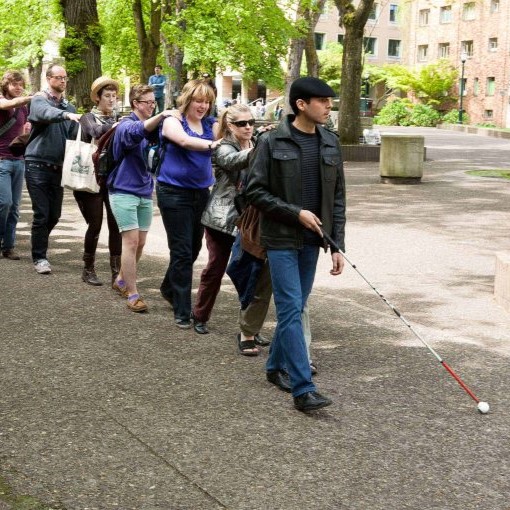
Carmen Papalia is a non-visual artist whose social practice includes engaging participants in exercising their other-than-visual senses. Blind Field Shuttle, for example, is an eyes-closed walking tour in which the artist leads up to forty people on a ramble through natural or urban settings. Participants are coached, and then arranged in a line, their right hand on the shoulder of the person in front of them. Papalia joins the front of the human chain and guides us with his walking stick and voice: “rough pavement coming up; feel the incline as you transition from the sidewalk to the road; tree on the left; low barrier ahead;” and so on.

Beyond the One-Liner: The Masks of Brian Jungen

Beyond the One-Liner: The Masks of Brian Jungen

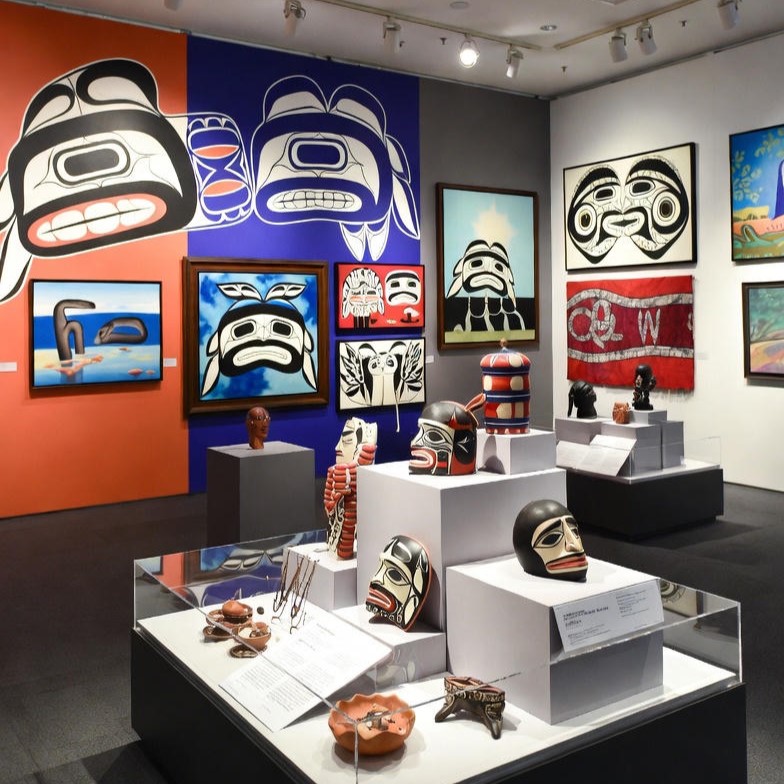
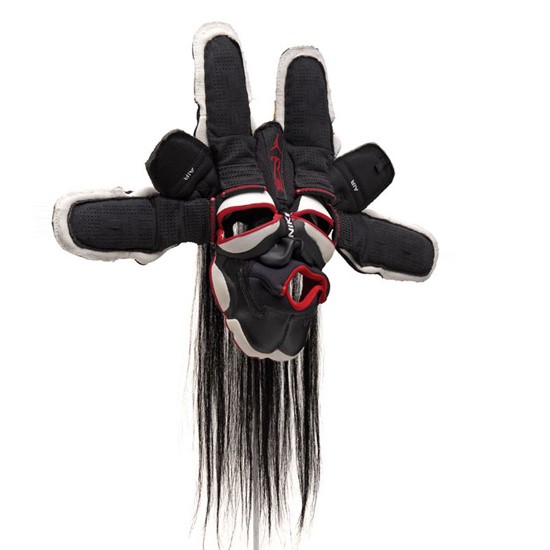
Six masks rest inside two, large, oak-framed vitrines of the sort favoured by anthropology museums in the first half of the last century. The masks are made from running shoes. While they resemble traditional Northwest Coast masks, no one would mistake them for the real thing. They look soft-sculpture versions of generic Haida objects as interpreted by Disney. Brian Jungen’s sculptures not only satirize the dominant culture’s expectations of First Nations art and people, but they also embody the anxious identities of a recent generation of urban Indians.

Becoming a Métis Artist

Becoming a Métis Artist

What is Métis art? I have called myself a Métis artist with confidence for only about twenty years. I’m fifty-seven. Before that, I just considered myself an artist, which I figured meant being creatively free. I saw art as an oasis, separate from the routine world. My art world consisted of an apartment studio, galleries, artist-run centres, art books and magazines, and other artists. Then it included art school.

Art, Science and Aesthetic Ethics

Art, Science and Aesthetic Ethics

Art and science are mutually exclusive fields. So-called art/science collaborations are inequitable: one discipline always dominates by using the other as a tool. Such ‘collaborations’ are more expressive of a desire than a logical possibility. What many artists desire from the exchange is to insert themselves as citizens into the debates that arise from scientific inquiry and the application of scientific results. In which case, artists do not really engage science but ethics, and while art does not have much effect on science, ethics permeates and influences the agents of both fields.

Apropos Appropriate Appropriations: Metissage After the Apologies

Apropos Appropriate Appropriations: Metissage After the Apologies

The title of our symposium, ‘Art and Appropriation Post the Apology’, suggests that we are at the Post; one age is behind us, another before us. An optimistic descendent of the Old World might read this as an indication that we are already living in a Post Apology era. ‘Post the Apology’, post-apologetic—being post, after, no longer having to apologize. This must be a relief for anyone suffering post-colonial guilt. Not so fast. The title elides what the contrition was for: apologized for what? We could be less euphemistic: ‘Art and Appropriation Post the Near-Genocide,’ ‘Post Forced Assimilation. ’

Appropriate and Inappropriate Appropriations

Appropriate and Inappropriate Appropriations

Elders explain that the knowledge they keep—of the environment, medicines, stories, philosophy and spirituality—does not belong to them. They are keepers, not owners. Because the teachings are true, gifts shared by the Creator, they must be available to those who ask—in the right way! Protocols protect and guide transmission. Teachings are not bundled into packets, transcribed and published, bought and sold. This knowledge is not textual but contextual, a human-to-human exchange shared in special settings; an embodied gift unwrapped over time.

APOLOGY DICE: COLLABORATION IN PROGRESS

APOLOGY DICE: COLLABORATION IN PROGRESS

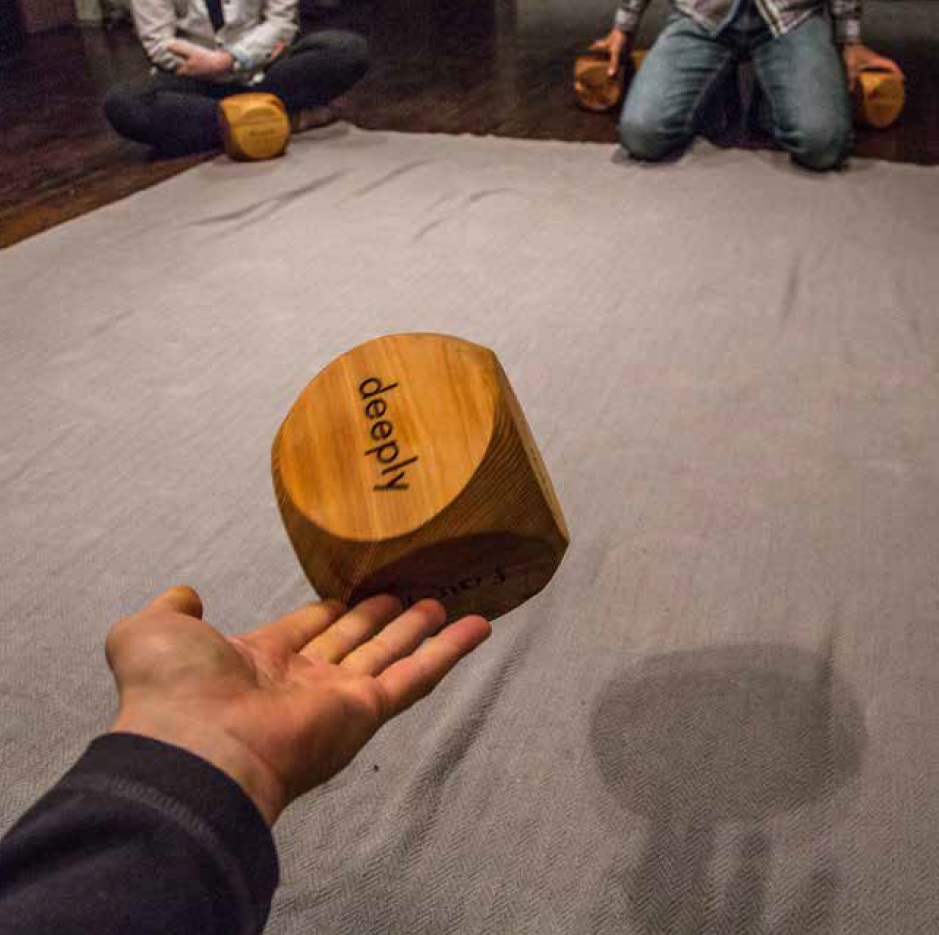
Snow and rain. Escaping the slushy, wet darkness, seven people gather in a circle around a generic grey blanket. In the centre are several oversized cedar dice incised with words. The first reads “I am,” “you are,” “we are,” and “they are.” The second reads “fairly,” “deeply,” “very,” “so,” “not,” and “somewhat.” The final die has five sides reading “sorry,” and one with “tired of this” carved into it. The possibilities and combinations disassemble and reassemble as everyone reaches for the dice to smell and feel their heft, their smooth rounded sides.

An Uncertain Latitude

An Uncertain Latitude

I wonder about artistic privilege. The advantages, attention, and public money granted to select artists, but especially the social margin, passage, and exception we occasionally enjoy. In exchange, artists make the absent present. We reflect the fleeting known in condensed, beautiful, novel, and more permanent or replicable forms. We recite, repeat, refresh, and invent. Artists fabulate the real. We devise the displays by which a people know and show themselves. We entertain. We educate without looking you in the eye.

MAKING IT LIKE A MAN!

MAKING IT LIKE A MAN!

Making it Like a Man! is the exhibition I curated for the Mackenzie Art Gallery to accompany the conference of the same name. These paintings, sculptures, photographs, and prints by a dozen male artists were selected from eighty submissions and forty studio visits in six provinces. No exhibition of contemporary Canadian masculinities can be exhaustive, only provocative. My intent was to survey the scene as deeply as time and budget allowed and present a sampling. The more than eighty works range from self-conscious interrogations of masculinity to more performative expressions. All provide insights. This text is condensed revision of the exhibition essay.

“The North American Iceberg”: the Role of Indigenous Art in Indigenization

“The North American Iceberg”: the Role of Indigenous Art in Indigenization

When I see Mary Longman’s sculpture at the Mackenzie Art Gallery, Lionel Peyachew’s statues in Yorkton, Leah Dorian’s book illustrations, Bob Boyer paintings in the Mendel, and stand inside Douglas Cardinal’s glass tipi at the First Nation’s University of Canada building, I experience these things not only as works of art but also as markers of First Nations and Métis presence.

Non-Colonial Indigenous Public Art and Memorials

Non-Colonial Indigenous Public Art and Memorials

Following final reports from The Truth and Reconciliation Commission of Canada (2015) and the National Inquiry into Missing and Murdered Indigenous Women and Girls (2019), and ongoing revelations of unmarked graves at former Indian Residential School sites, Canada blooms with Indigenous memorials and public art. Too often, however, these works, and the committees that select them, reproduce colonial habits. They present Aboriginal appearance rather than embody Indigenous engagement. Methodologies to assist folks develop Indigenous public art as a form of conciliation exist.

Restor(y)ing Colonial Public Art

Restor(y)ing Colonial Public Art

A few years ago, as a work of performance art, I dressed as Louis Riel and visited statues of John A. Macdonald. While I wished these metal effigies gone, I did not dream it would happen. I appreciate their later removal in Regina and Kingston as a sign of post-TRC progress. That said, should all public art deemed sexist, racist, and/or colonial propaganda be purged?

Reason for Passion
Reason for Passion
I am conflicted about the recent vandalism and destruction of colonial statues and churches in Northern Turtle Island. As a visual artist and writer who tries to make meaningful and well-made things, and who appreciates how difficult and fragile art and consciousness are, I distrust the direct, the rapid, and the destructive. Born with a preference for reason over passion, I am compelled to collect and evaluate the facts before judging, before acting. The problem with reason, however, is that it can be too reasonable. Slow, cool calculations oil the machinery of the status quo and discourage passionate action—any disruptive action, really—beyond opining or art making. And, at times like ours, both reason and art fail to satisfy the need for radical change.

Western Standard Time, Non-colonial Time, and Indigenous Futurisms

Western Standard Time, Non-colonial Time, and Indigenous Futurisms

Indigenization is the transformation of any totalizing ideology, culture, or power to better suit the wisdom, ways, and needs of a local community. The process assumes that a People and their territory have been invaded, and that their futures—even ones that feature colonial expulsion—includes negotiated adaptations to the contemporary rather than a complete return to the past. Indigenization is decolonial in that it both conceptually and physically resists colonization’s totalizing drive. This refusal includes the decentering of Western standard time.

Writing About Indigenous Art with Critical Care

Writing About Indigenous Art with Critical Care

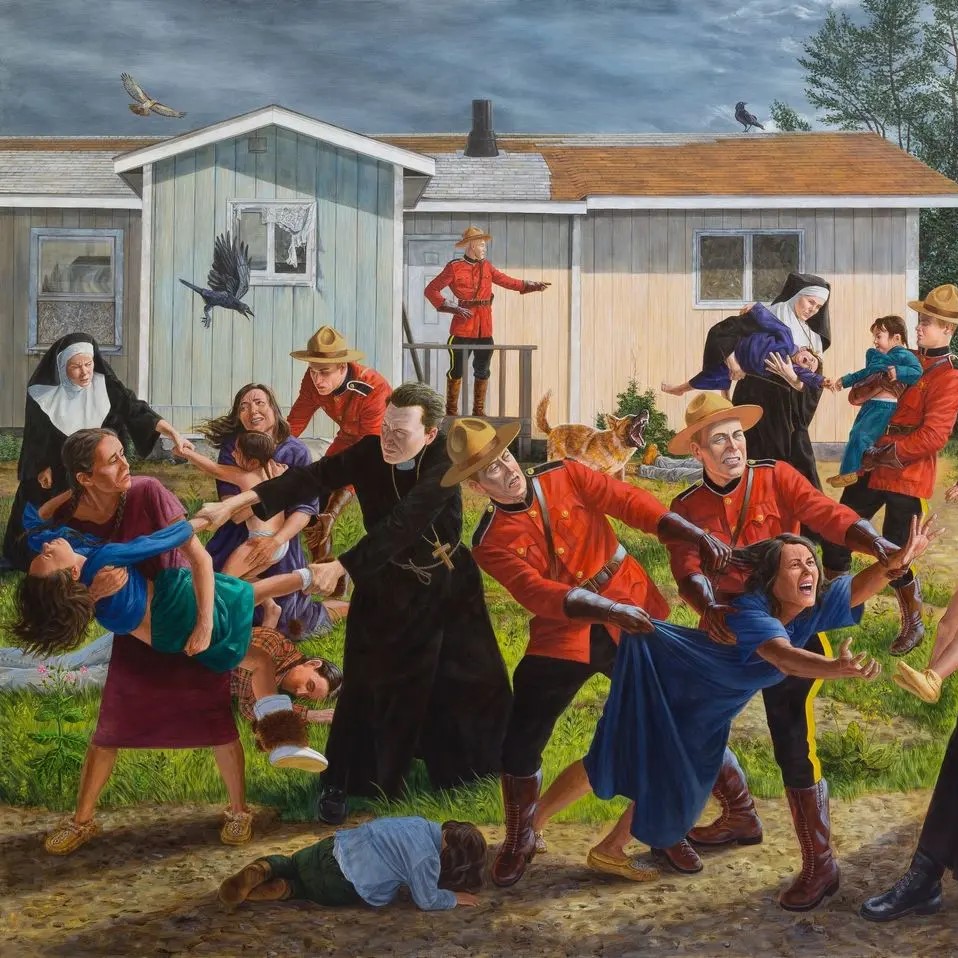
With arms crossed, a Métis curator contemplates Kent Monkman’s The Scream (2017) at the Winnipeg Art Gallery. The history painting dramatizes Canada’s seizure of First Nations, Inuit and Métis children for incarceration and assimilation in church-run Indian Residential Schools. The tragedy roils in a sunlit yard between a modest rural house and the viewer. Two black-cassocked priests, a pair of wimpled nuns and seven men in scarlet tunics swarm a reserve to separate 10 children from their families, homes, language, spirituality, culture and dignity.

History is edited by the Victors: Rethinking Indigenous Public Art

History is edited by the Victors: Rethinking Indigenous Public Art

The John A. Macdonald statue in Victoria Park, Regina, is an ordinary oddity. Its strangeness is easy to ignore if you identify with the man represented and the people who commissioned, made, and paid for it. To Indigenous folks, the sculpture is a routine provocation. Like the equestrian Queen in front of the Legislative Building, the statue is a proclamation of colonial power to a provincial outpost, a reminder of who was and is in charge.

Walter May: After the Rapture

Walter May: After the Rapture

Walter May forages for meaning in the detritus of a society he has fallen into but only reluctantly belongs. He is a witness sifting through refuse for fragments to be cobbled into tactile poetry. Once narratives have been discredited, become confused, or lost, the only reliable thing is the silent testimony of the hand made. May crafts enigmatic hybrids, melancholic comic representatives of the human condition with the sincerity of the last sculptor on earth. He fashions solace for survivors.

The Floating World

The Floating World

Beneath an undulant screen of bent reflections and a veil of skittering, tendrilled organisms, I search for Liz Ingram’s face. The print’s title, “Seductive Echo l (Self Portrait),” promises her presence. Dark patches might be hair and eyebrows, but her other features are washed out. The artificial light, the porcelain gleam and the shallow water indicate a domestic rather than natural setting. This Ophelia drowns at home.

Rocks, Stones, and Grandfathers

Rocks, Stones, and Grandfathers

My body rests in a boulder. Depending on your worldview, the rock was split by frost or legend. For geologists, it is a glacial erratic, one of thousands of quartzite blocks cleaved from the Rocky Mountains, carried by centuries of ice action hundreds of kilometers then deposited across Southern Alberta in what they call the Foothills Erratics Train.

“’Revolve’: Maxing Out Minimalism.”

“’Revolve’: Maxing Out Minimalism.”

As the Age of Irony scales to its baroque crescendo, there is a growing interest in the more contemplative close harmonies of the minimalist aesthetic. Revolve is an antidote to the clutter, flash and noise of so many recent exhibitions. The fourteen sculptures, and one large suite of drawings, generously spaced throughout five rooms lowers the heart rate and seduces the viewer into looking beyond language to the sensual realm of form and relationship.

Reveal/Conceal

Reveal/Conceal

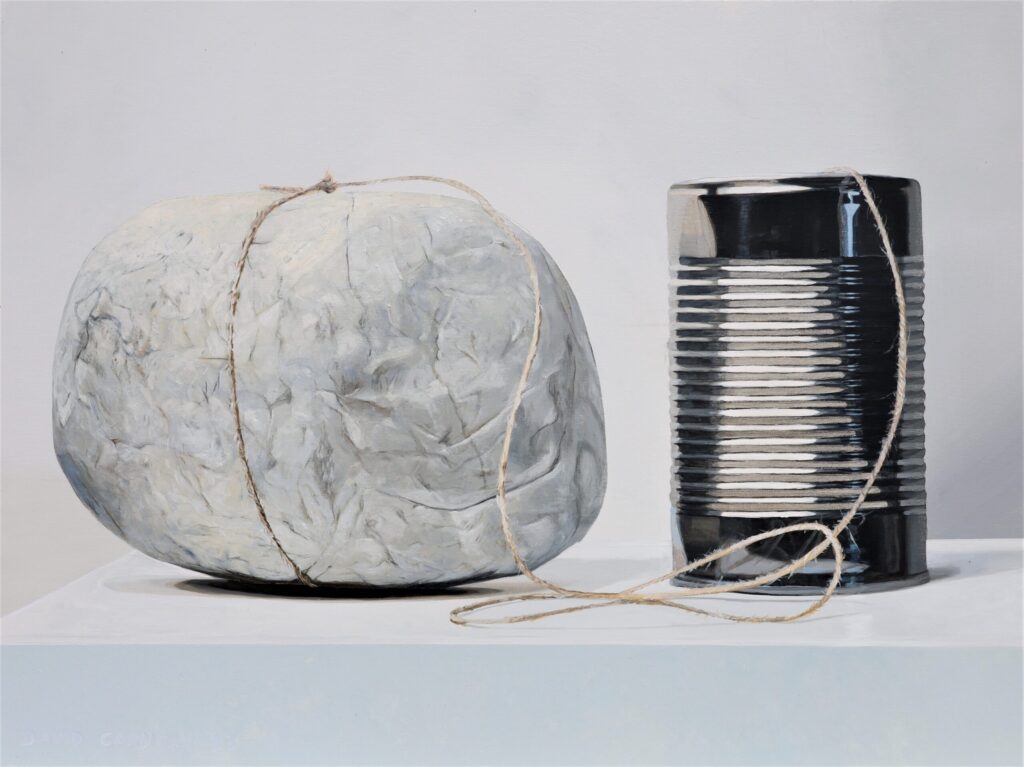
Eric Cameron and Chris Gardiner create seemingly spare formal objects, hand-made monochromes—self-contained, silent, beautiful and strange. But beneath their cool minimalist shells lie warmer layers of experience, ritual, repression, and desire. Like visitors in a museum, these calm figures roil with deep feeling beneath deliberate wrappings.

Pandora’s Box

Pandora’s Box

A slave sucks the penis of her hanged master; girls frolic naked in a playground; portraits are collaged from fragments of porno magazines; and hookah pipe hoses snake into a woman’s various orifices. This is not your mother’s feminist art.

Our Better Natures: Alison Judd, Dylan Miner, and Terrance Houle in Dawson City

Our Better Natures: Alison Judd, Dylan Miner, and Terrance Houle in Dawson City

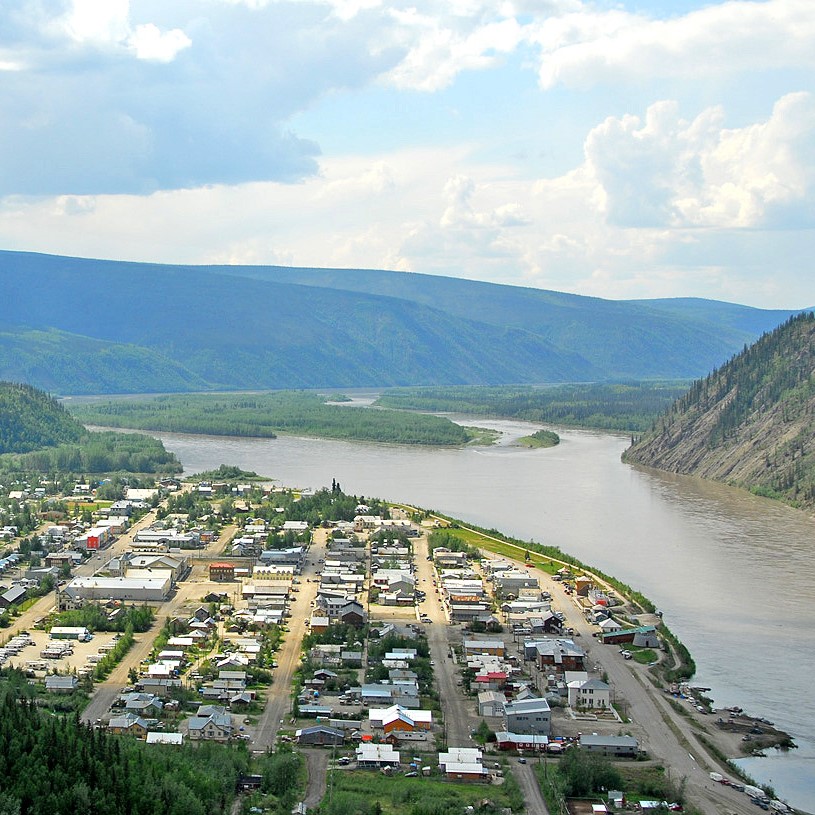
The rounded mountains, west of Dawson City, Yukon, is one of the quietest natural places on the planet. Hunched in the light drizzle, pulling berries from low bushes on a smooth slope, I heard the static of rain rhyming with my tinnitus, the gentle rummage of fellow harvesters, and nothing else.

Nadia Myre: Making, Connections

Nadia Myre: Making, Connections

Nadia Myre’s beaded “Indian Act” and her half birch bark, half aluminum canoe (“History in Two Parts” 2002) are iconic Aboriginal Canadian art works. “Indian Act” (1999-2002) consists of all 56 pages of that federal statute transliterated into beads. White seed beads displace letters while red ones occupy the ground, suggesting that the government’s words are racially ‘white’, the colonist’s language. These passages can also be read as blanks, mute absences punctuating red territory.

Lyndal Osborne: Unnatural Science

Lyndal Osborne: Unnatural Science

Spear grass is cut and bundled. Mussel shells, bird nests, wild clematis, eucalyptus bark, fishing lures, coyote ribs and birch bark are secreted into a backpack. A gossamer wasp nest rests in open palms. Pinecones, lichen, ironbark gum, jacaranda seed pods, terebridae shells and shotgun shells are stuffed into pockets.

Jordan Bennett’s (Re)creative Research and Mi’kmaq Contemporary Art

Jordan Bennett’s (Re)creative Research and Mi’kmaq Contemporary Art

The central task of Indigenous contemporary art is to creatively express and deepen Native identities as contemporary modes of being. This is not easy. What it means to be Mi’kmaq, for example, is difficult to tease apart from the sticky threads of centuries of colonial repression and re-education.
James Nicholas and Sandra Semchuk’s Intimate, Poetic Politics

James Nicholas and Sandra Semchuk’s Intimate, Poetic Politics

James Nicholas (1947-2007) and Sandra Semchuk (1948-) were lovers. He was a Rock Cree from rural Manitoba. She is a Ukrainian/Polish-Canadian from rural Saskatchewan. From 1993 until his accidental death in 2007, they nurtured a romantic and creative partnership that did not transcend race and gender, or escape colonization, but worked through this mess and toward something respectful, often beautiful, frequently painful, and always poignant.

Frank Shebageget: Quantification

Frank Shebageget: Quantification

Frank Shebageget’s exhibition, Quantification, uses dominant culture modes—repetition and Minimalism from Modernist art, and lists from Statistics—to demonstrate how people are made into colonized subjects. But his work is not dispassionate or burdened by black and white moralizing. Shebageget, an Ottawa-based Ojibway artist, translates these rather cool methodologies into handmade poems that resonate with hearts as well as minds. He presents facts and images, he hints but leaves conclusions to us.

Enlightenment in the Suburbs (Michael Campbell)

Enlightenment in the Suburbs (Michael Campbell)

Michael Cambell is emerging as newest member of the Lethbridge School. Janet Cardiff, George Bures Miller, David Hoffos, and now Campbell have sprung from their incubation in this small southern Alberta city to return magic to the artworld.

David Hoffos: Nothing Never Happens

David Hoffos: Nothing Never Happens

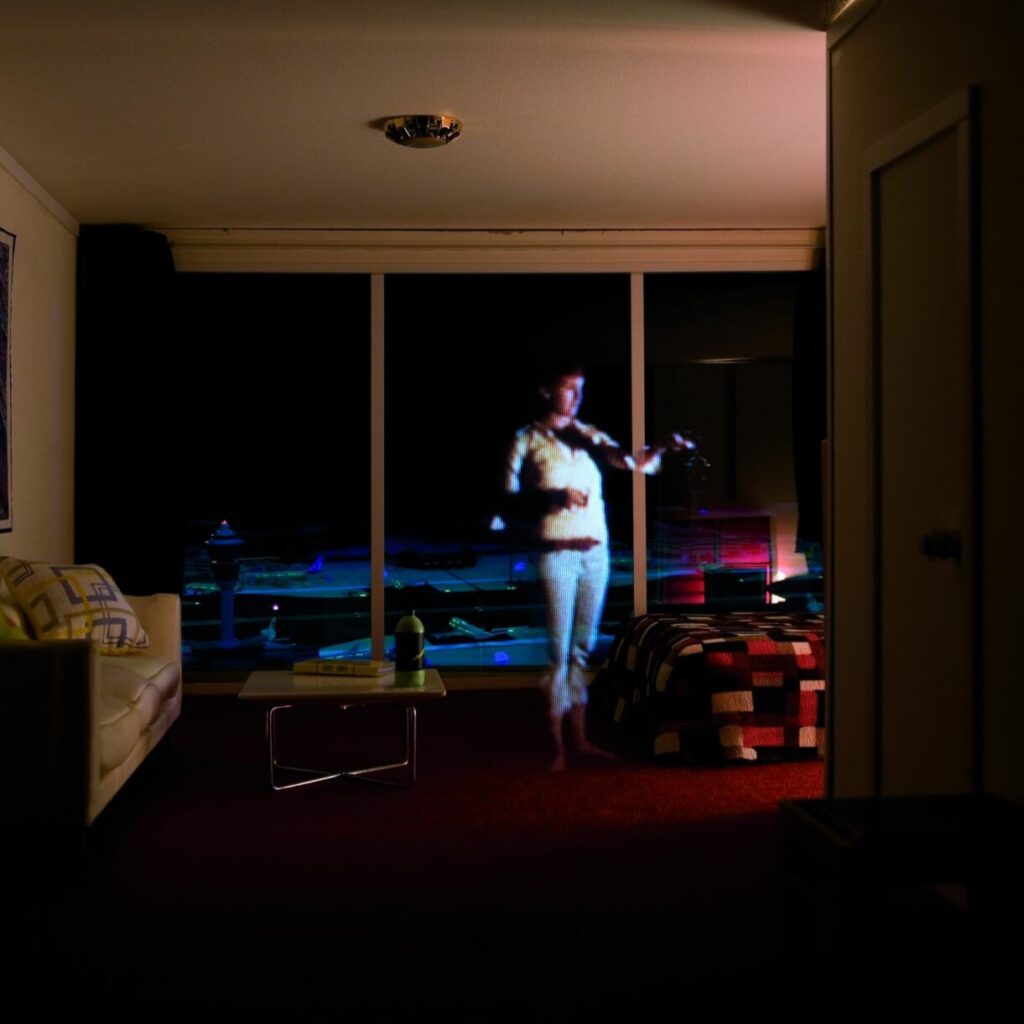
You pass from daylight into the exhibition’s shadow realm through heavy purple drapes. Inside the expansive but crowded gallery, a low cacophony of synthesized music surges. Mysterious mechanical and faint city sounds, distant laughter, and noises from the night woods surround you. As eyes adjust to the dark, a faint glow radiates from muffled television sets.
Dana Claxton’s The Patient Storm

Dana Claxton’s The Patient Storm

Indigenous presence in the popular media is usually a cue to stories of crime, abuse, poverty, loss, fluff and feathers pride, or government sponsored success. And Aboriginal self-representations, when they don’t mirror mainstream narratives, are often self-reflexive tortured recitations on: ‘what does it mean to be Native in contemporary times?’ and ‘how will we ever get over the damage?’ Meta-discourse is instructive but not very inspiring.

Close Encounters

Close Encounters

There may come a day when the idea of an Aboriginal-only exhibition of contemporary art will seem quaint. Quaint because, for example, in a Neo-Modernist future where everyone agrees that art and the individual talent is beyond ethnicity, ‘ghetto’ exhibitions would be considered retrograde.
Appropriate Buddha

Appropriate Buddha

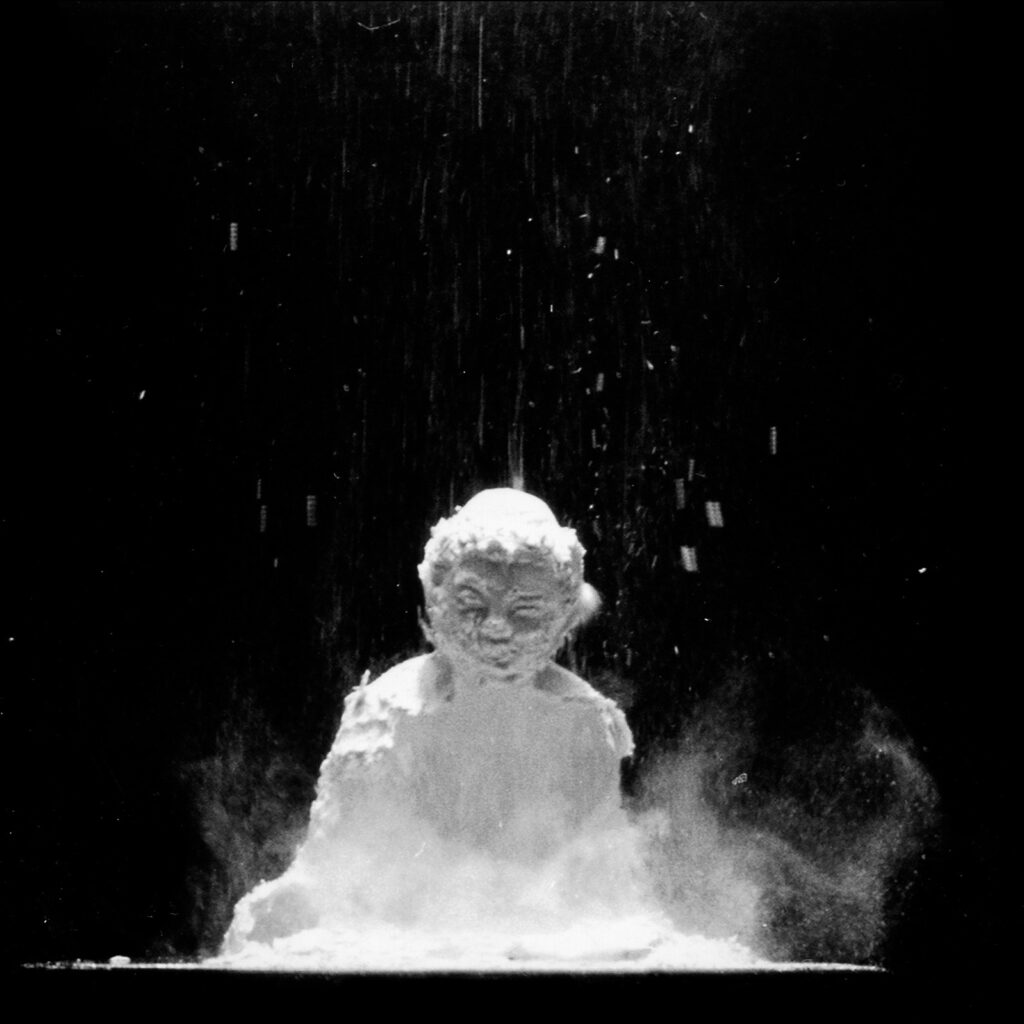
With Lee Henderson. “Appropriate Buddha.” “Blueprint for a New Gravity,” a production still from a video installation of the same name, features a clay Buddha dissolving in water. Fine air bubbles escape and rise from the body, and a front section has broken away. In the video, the grey form softens then slumps and collapses into a mound of settled particles and swirls of diffusing dust. Both are memento mori pictures—we come from clay; we return to clay.
‘Terribly Beautiful’: Joane Cardinal-Schubert’s ‘Intervention of Passion’

‘Terribly Beautiful’: Joane Cardinal-Schubert’s ‘Intervention of Passion’

A Native woman sits on a park bench; her infant son wrapped in a blanket and her arms. A white woman approaches smiles at the scene and declares, “What a cute baby!” “Cute now,” says the mother, “but when he grows up you might not like him so much.”

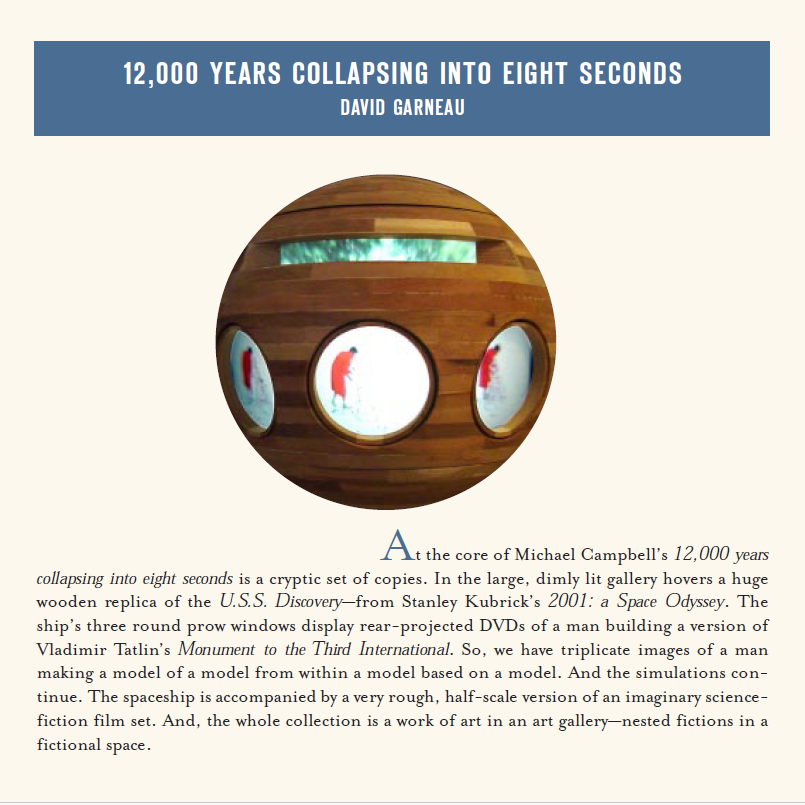
Michael Campbell, 12,000 YEARS COLLAPSING INTO EIGHT SECONDS

Michael Campbell, 12,000 YEARS COLLAPSING INTO EIGHT SECONDS

At the core of Michael CampbellÕs 12,000 years collapsing into eight seconds is a cryptic set of copies. In the large, dimly lit gallery hovers a huge wooden replica of the U.S.S. DiscoveryÑfrom Stanley KubrickÕs 2001: a Space Odyssey. m within a model based on a model. And the simulations continue.

Still Looking for E/quality: Quality of care versus aesthetic quality

Still Looking for E/quality: Quality of care versus aesthetic quality

Nearly three decades ago, I wrote "Beyond the Pale: Looking for E/quality Outside the White Imaginary" for Parallelogramme1. Electrified by the Minquon Panchayat cultural activists I orbited, the article considers resistance to other than Euro-North American art and artists, particularly in the artist-run centers where one would expect better. Reading it now, I remember growing pains: in the artist-run system, among racialized artists individually and as burgeoning collectives, and in myself. I wrestled with social expressions of my identity.

Another Roadside Abstraction

Another Roadside Abstraction

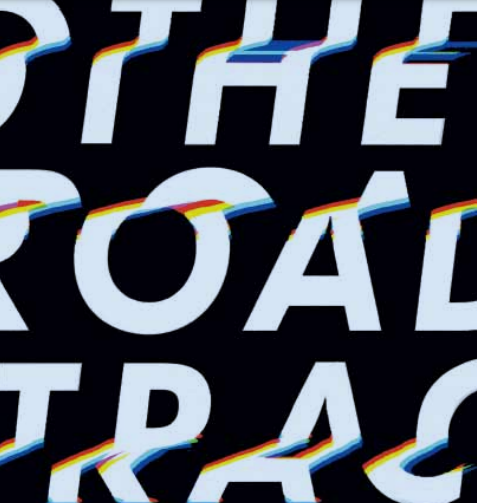
The road has played an important role in the development of North American culture. As it extends beyond the horizon, the road seduces us with its unique brand of freedom toward the experience of other cultures, and the thrilling panoramas of new landscapes.

Riel Coin

Riel Coin

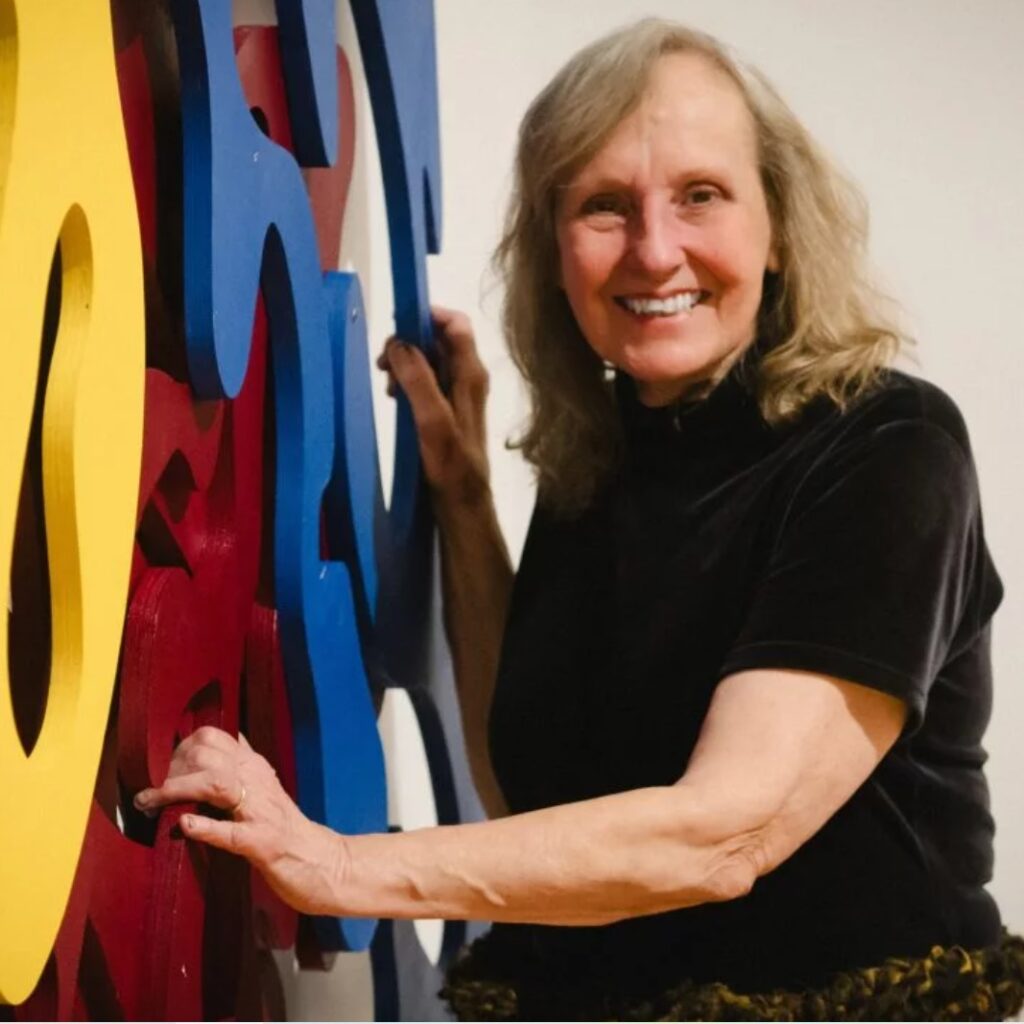
Garneau, an artist and professor of visual arts at the University of Regina, designed the silver collector coin celebrating the Métis leader who founded Manitoba. He said being at the ceremony among Métis dignitaries brought home the need for some kind of nation-to-nation recognition. The coin was launched on the 175th anniversary of Riel’s birth.