DAVID GARNEAU

Art Exhibition

This section brings together all selected writings on contemporary art, exhibition practices, and Indigenous representation. The texts are also organized thematically and can be accessed through the menu under the following sections: “Accessibility”, “Art Exhibitions”, “My Art and Curation”, “Conciliation”, “Cultural Appropriation”, “Indigenous Art, Display, and Criticism”, and “Other Writing”.
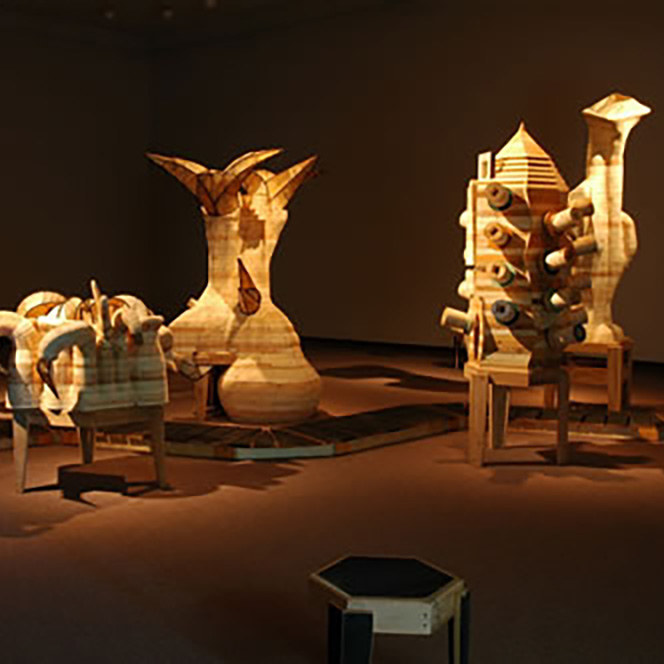
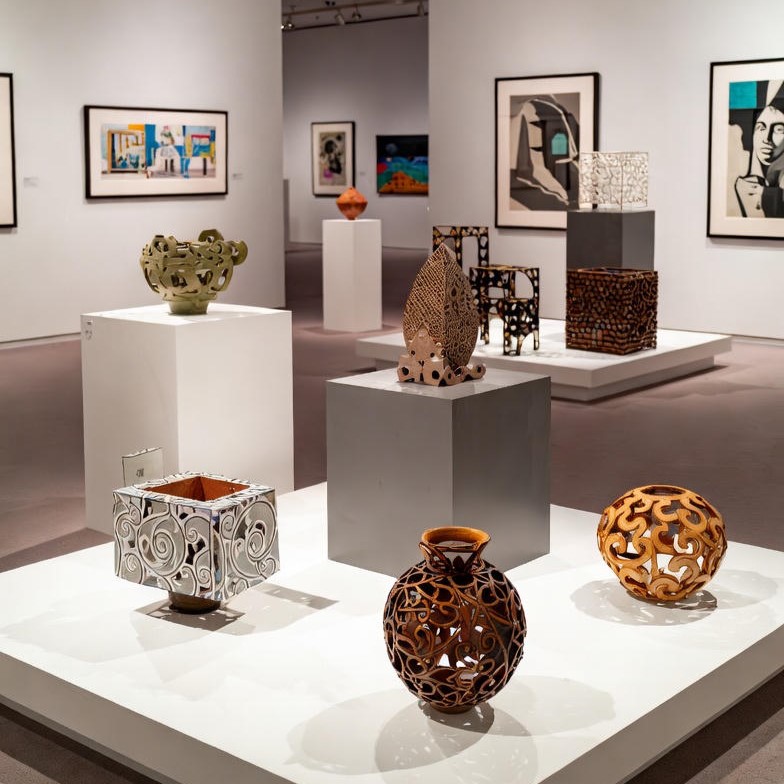
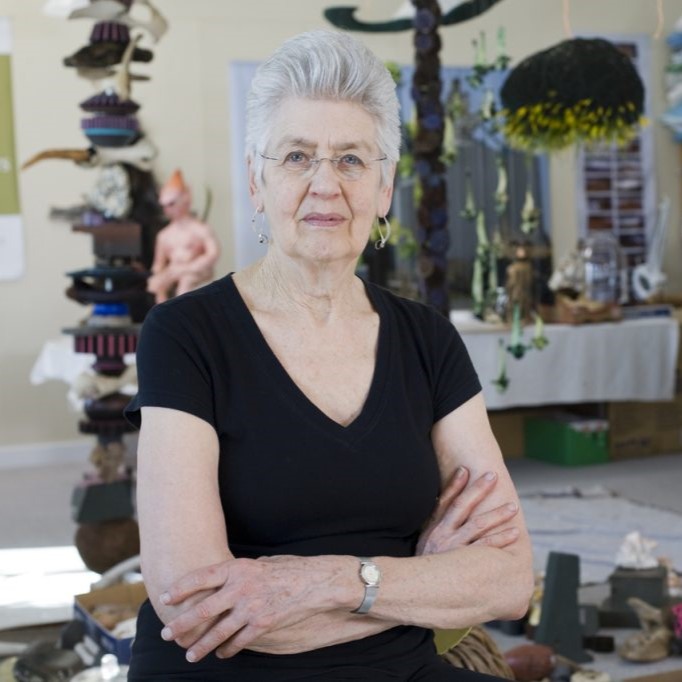
Symbolic Vessels. (“Joan Scaglione: Exposed Journey.”)

Symbolic Vessels. (“Joan Scaglione: Exposed Journey.”)

Great drawings thrill us because of their immediacy. They seem to be spontaneous physical forms of thinking or feeling. Because most drawings do not conceal their process, viewers can imaginatively retrace the evolution of the work as they can in few other art forms. And this sense of participation is increased by the fact that while not everyone sculpts, paints, makes movies, composes music, and so on, nearly everyone has drawn. Drawing, like storytelling, is an elemental human practice— a form of communication, therapy and magic.

Somewhere in Between

Somewhere in Between

A few years ago, Sean Woodruff Whalley and John Henry Fine Day noticed that their preferred sculpture mediums complemented each other. Sean works with softwoods and John Henry with raw hide. Both materials have a mellow blond colour. The artists also discovered a temperamental and philosophical resonance. They are interested in the complex interplay between people and nature. Sean, born and raised in Southern Ontario—once home of the largest broad leaf forest in the world, now a heavily populated, industrialized, and polluted area—is concerned with environmental sustainability, and John Henry—a member of the Sweetgrass First Nation—shares his Cree heritage’s belief in the interrelatedness of people, animals, spirits, and environments.

Rolande Souliere’s Sign Language

Rolande Souliere’s Sign Language

Each episode of Thomas King’s CBC radio show The Dead Dog Café Comedy Hour (1997-2000) closed with the line "Stay calm, be brave; wait for the signs." The program routinely poked fun at Indian Romanticism—producing with the spin of a wheel, for example, ‘genuine’ Indian names for lucky callers. And, yet, as with much of King’s comedy, uncomfortable truths lurked beneath the irony. Dead Dog often tackled The Indian Act, the legacy of the Residential schools, and the contrast of contemporary urban, Aboriginal identity and rez life—usually with the citified King as the butt of his own jokes.

Mobile Structures: Dialogues Between Ceramics and Architecture in Canadian Art MacKenzie Art Gallery

Mobile Structures: Dialogues Between Ceramics and Architecture in Canadian Art MacKenzie Art Gallery

Art historians will some day designate the moment when ceramics saw itself as, and therefore became, art. While this event happened before Mobile Structures, the complexity and conceptual inventiveness of the works in this exhibition testify that the transformation has occurred and that, for ceramic artists, there is no going back.

Messages Beyond the Medium

Messages Beyond the Medium

Duchamp once said that works of art have a shelf-life of about a decade. Masterpieces might retain their validity for 50 years. I think he was serious. I think he was right, exempting, of course, his own work. It is the fate of successful art movements that, as the world catches up to their innovations, the individual objects lose their original power: the capacity to shock, to confuse in a meaningful way, to incite, to embarrass, to make you see – and even want to live – differently. Such works become museum pieces, exemplary, canonical, nostalgic.

Linda Duval: Resonating Images

Linda Duval: Resonating Images

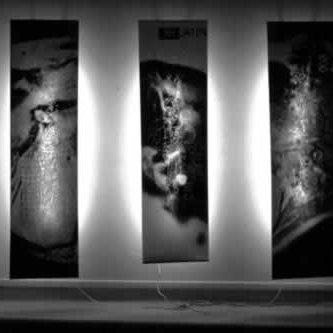
In her exhibition, “Bred in the Bone,” Linda Duvall conflates two ways of picturing ourselves: conventional portrait photography and Magnetic Resonance Imaging (MRI). This pairing demonstrates the possibilities and limitations for each technology and highlights our desire to know ourselves through images.

Jennifer McRorie: Vanitas

Jennifer McRorie: Vanitas

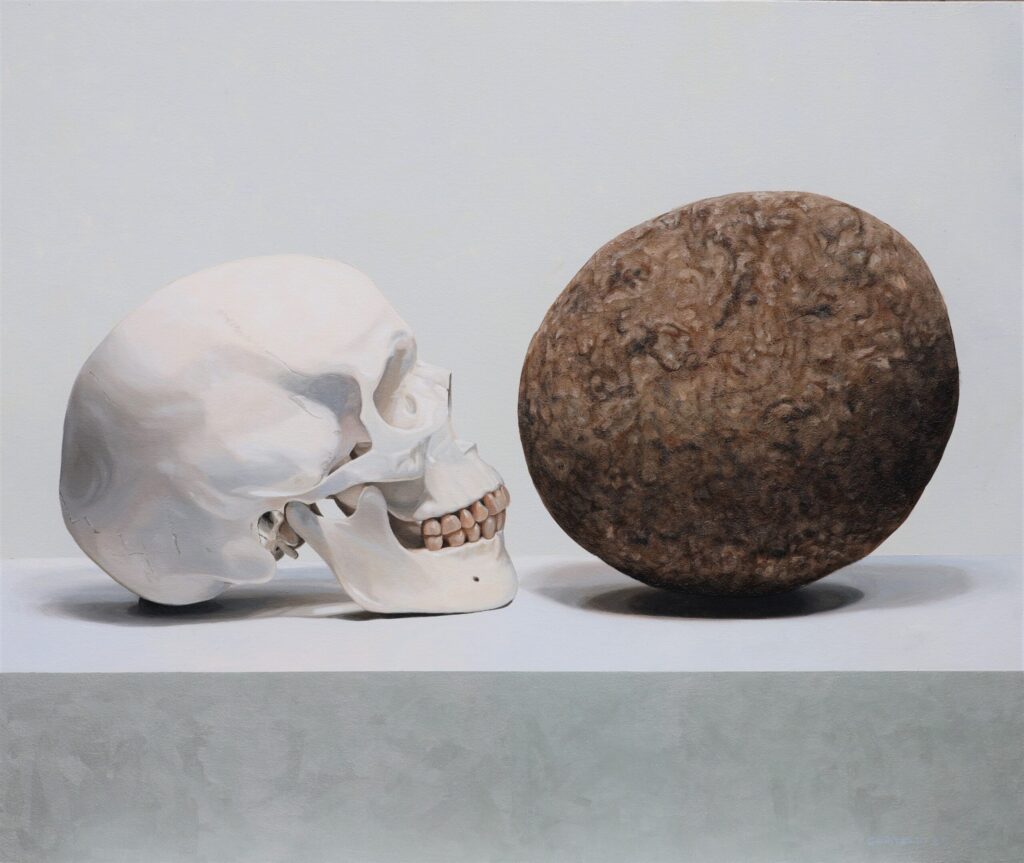
“Vanitas” is Latin for ‘empty’ or ‘worthless’. A popular genre among the 17th century Dutch, vanitas still life paintings brim with symbols expressing the transience of earthly pleasures and the futility of human achievement: flowers die, fruit rots, beauty fades. In less subtle visual lessons, empty sockets return the viewer’s gaze from a grinning skull, candles are snuffed out, sand drains from an hourglass.

Jennifer McRorie: Philosophy of the Flesh

Jennifer McRorie: Philosophy of the Flesh

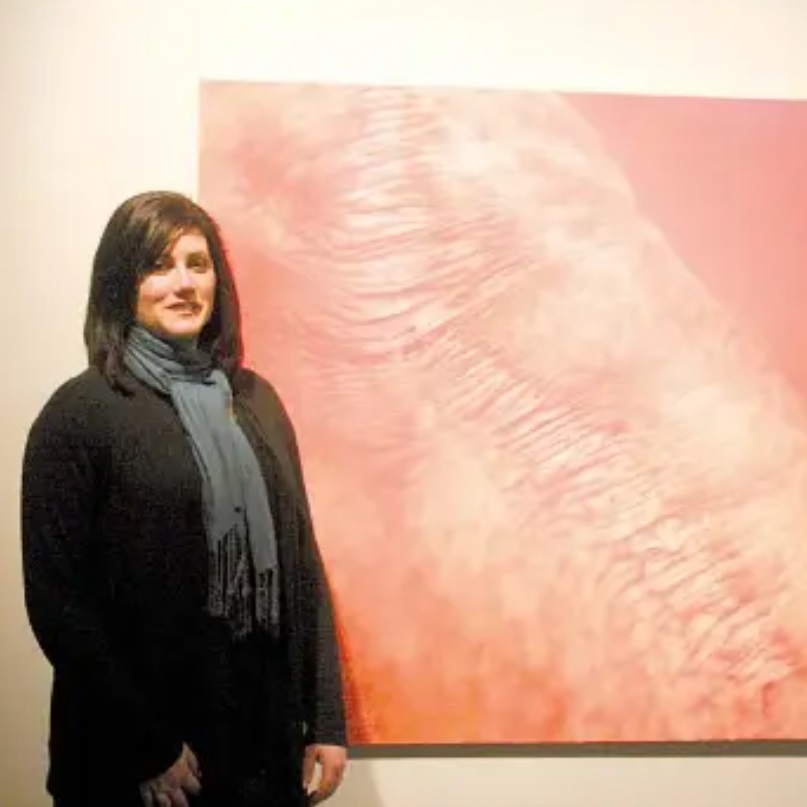
The gallery is lined with skin, twelve large paintings of naked, glowing flesh. Each magnifies a parcel of human veneer against a sliver of cool background. Warm figures swell beyond the picture-plane and threatening to press their raw, ambiguous bodies against the viewer. From a distance, the images appear photorealistic; up-close, they are abstract topographies. Though expertly rendered in sensuous oil paint, visual pleasure is arrested by a visceral disturbance; scars tear against the grain of each lovely surface.

“Insiders Out: Insiders In.”

“Insiders Out: Insiders In.”

One way to appreciate art is to enter a gallery without preconceptions. Avoid the labels and artist statements. Just look at the work and be open to the affect. Art critic Clement Greenberg famously used to cover his eyes, have a painting placed in front of him, then flash open his hands and absorb the rush of innocent visual experience: first impression, best impression. This method sees art as a pure communication between the artist and public through a sensuous object. The sensitive viewer luxuriates in the pleasure of the aesthetic moment before the contaminating world of judgment and desire rushes in.

Douglas Gordon: Filmic Re-Presentation(s).

Douglas Gordon: Filmic Re-Presentation(s).

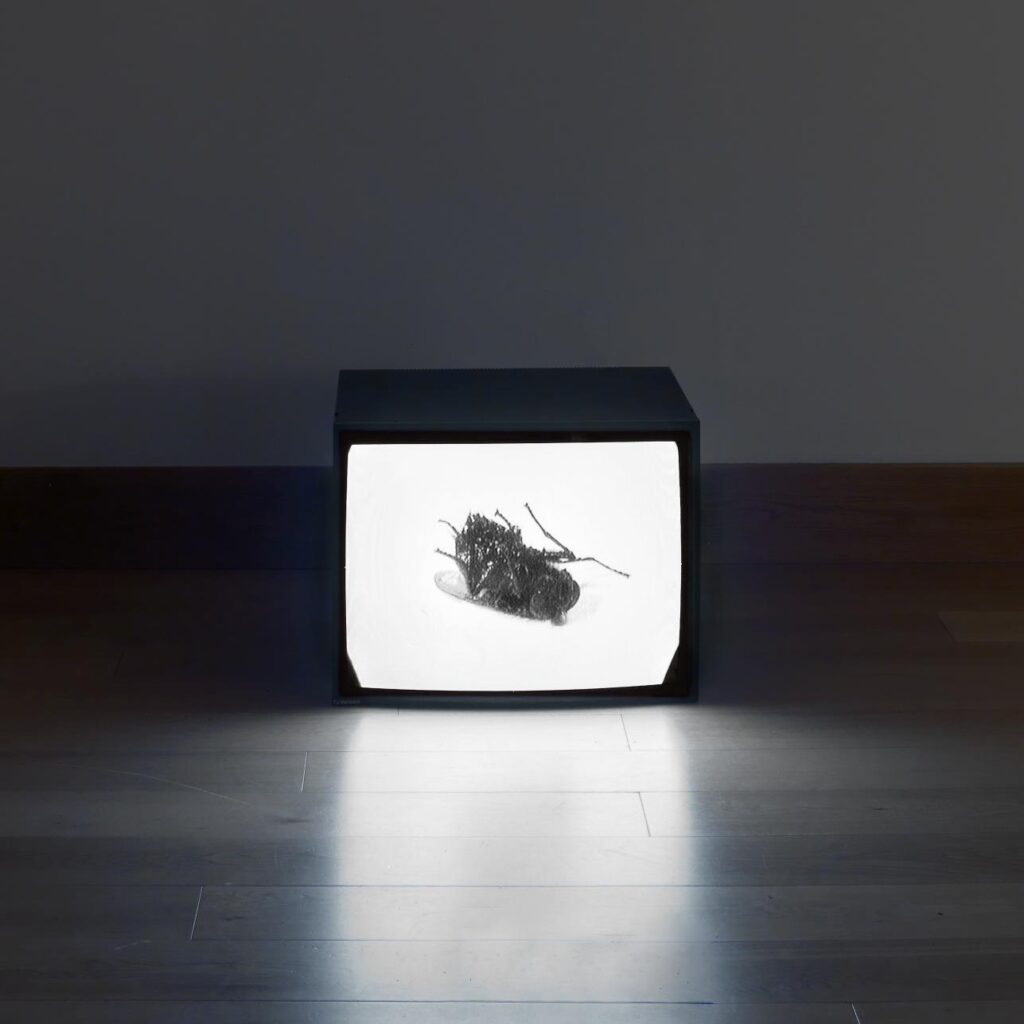
A little square of light levitates at eye-level before a black wall. Moving closer, the beam resolves into an image of an inverted housefly. Even before considering the picture, the viewer will be amazed by this spare illusion. While touch reveals the image to be flush with the wall, the eye remains unconvinced: the glowing square seems to hover at least four inches into space. The second surprise is a sudden movement. The work is not a miniature light box but a tiny video monitor. Every few seconds, in a futile attempt to right itself, the fly kicks furiously, then, just as suddenly, stops. That the struggle in this animated still life has no effect suggests that the insect is glued to the table.

Beyond the One-Liner: The Masks of Brian Jungen

Beyond the One-Liner: The Masks of Brian Jungen

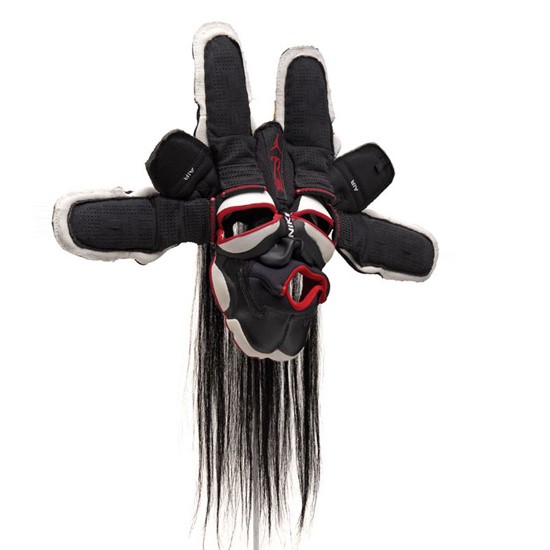
Six masks rest inside two, large, oak-framed vitrines of the sort favoured by anthropology museums in the first half of the last century. The masks are made from running shoes. While they resemble traditional Northwest Coast masks, no one would mistake them for the real thing. They look soft-sculpture versions of generic Haida objects as interpreted by Disney. Brian Jungen’s sculptures not only satirize the dominant culture’s expectations of First Nations art and people, but they also embody the anxious identities of a recent generation of urban Indians.

Walter May: After the Rapture

Walter May: After the Rapture

Walter May forages for meaning in the detritus of a society he has fallen into but only reluctantly belongs. He is a witness sifting through refuse for fragments to be cobbled into tactile poetry. Once narratives have been discredited, become confused, or lost, the only reliable thing is the silent testimony of the hand made. May crafts enigmatic hybrids, melancholic comic representatives of the human condition with the sincerity of the last sculptor on earth. He fashions solace for survivors.

The Floating World

The Floating World

Beneath an undulant screen of bent reflections and a veil of skittering, tendrilled organisms, I search for Liz Ingram’s face. The print’s title, “Seductive Echo l (Self Portrait),” promises her presence. Dark patches might be hair and eyebrows, but her other features are washed out. The artificial light, the porcelain gleam and the shallow water indicate a domestic rather than natural setting. This Ophelia drowns at home.

Rocks, Stones, and Grandfathers

Rocks, Stones, and Grandfathers

My body rests in a boulder. Depending on your worldview, the rock was split by frost or legend. For geologists, it is a glacial erratic, one of thousands of quartzite blocks cleaved from the Rocky Mountains, carried by centuries of ice action hundreds of kilometers then deposited across Southern Alberta in what they call the Foothills Erratics Train.

“’Revolve’: Maxing Out Minimalism.”

“’Revolve’: Maxing Out Minimalism.”

As the Age of Irony scales to its baroque crescendo, there is a growing interest in the more contemplative close harmonies of the minimalist aesthetic. Revolve is an antidote to the clutter, flash and noise of so many recent exhibitions. The fourteen sculptures, and one large suite of drawings, generously spaced throughout five rooms lowers the heart rate and seduces the viewer into looking beyond language to the sensual realm of form and relationship.

Reveal/Conceal

Reveal/Conceal

Eric Cameron and Chris Gardiner create seemingly spare formal objects, hand-made monochromes—self-contained, silent, beautiful and strange. But beneath their cool minimalist shells lie warmer layers of experience, ritual, repression, and desire. Like visitors in a museum, these calm figures roil with deep feeling beneath deliberate wrappings.

Pandora’s Box

Pandora’s Box

A slave sucks the penis of her hanged master; girls frolic naked in a playground; portraits are collaged from fragments of porno magazines; and hookah pipe hoses snake into a woman’s various orifices. This is not your mother’s feminist art.

Our Better Natures: Alison Judd, Dylan Miner, and Terrance Houle in Dawson City

Our Better Natures: Alison Judd, Dylan Miner, and Terrance Houle in Dawson City

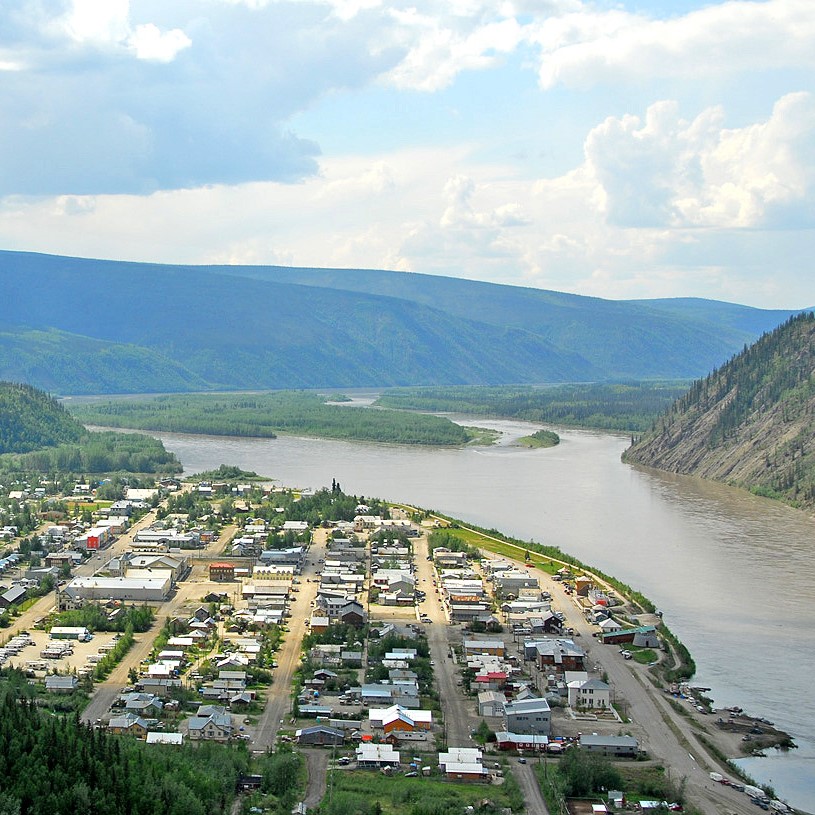
The rounded mountains, west of Dawson City, Yukon, is one of the quietest natural places on the planet. Hunched in the light drizzle, pulling berries from low bushes on a smooth slope, I heard the static of rain rhyming with my tinnitus, the gentle rummage of fellow harvesters, and nothing else.

Nadia Myre: Making, Connections

Nadia Myre: Making, Connections

Nadia Myre’s beaded “Indian Act” and her half birch bark, half aluminum canoe (“History in Two Parts” 2002) are iconic Aboriginal Canadian art works. “Indian Act” (1999-2002) consists of all 56 pages of that federal statute transliterated into beads. White seed beads displace letters while red ones occupy the ground, suggesting that the government’s words are racially ‘white’, the colonist’s language. These passages can also be read as blanks, mute absences punctuating red territory.

Lyndal Osborne: Unnatural Science

Lyndal Osborne: Unnatural Science

Spear grass is cut and bundled. Mussel shells, bird nests, wild clematis, eucalyptus bark, fishing lures, coyote ribs and birch bark are secreted into a backpack. A gossamer wasp nest rests in open palms. Pinecones, lichen, ironbark gum, jacaranda seed pods, terebridae shells and shotgun shells are stuffed into pockets.

Jordan Bennett’s (Re)creative Research and Mi’kmaq Contemporary Art

Jordan Bennett’s (Re)creative Research and Mi’kmaq Contemporary Art

The central task of Indigenous contemporary art is to creatively express and deepen Native identities as contemporary modes of being. This is not easy. What it means to be Mi’kmaq, for example, is difficult to tease apart from the sticky threads of centuries of colonial repression and re-education.

James Nicholas and Sandra Semchuk’s Intimate, Poetic Politics

James Nicholas and Sandra Semchuk’s Intimate, Poetic Politics

James Nicholas (1947-2007) and Sandra Semchuk (1948-) were lovers. He was a Rock Cree from rural Manitoba. She is a Ukrainian/Polish-Canadian from rural Saskatchewan. From 1993 until his accidental death in 2007, they nurtured a romantic and creative partnership that did not transcend race and gender, or escape colonization, but worked through this mess and toward something respectful, often beautiful, frequently painful, and always poignant.

Frank Shebageget: Quantification

Frank Shebageget: Quantification

Frank Shebageget’s exhibition, Quantification, uses dominant culture modes—repetition and Minimalism from Modernist art, and lists from Statistics—to demonstrate how people are made into colonized subjects. But his work is not dispassionate or burdened by black and white moralizing. Shebageget, an Ottawa-based Ojibway artist, translates these rather cool methodologies into handmade poems that resonate with hearts as well as minds. He presents facts and images, he hints but leaves conclusions to us.

Enlightenment in the Suburbs (Michael Campbell)

Enlightenment in the Suburbs (Michael Campbell)

Michael Cambell is emerging as newest member of the Lethbridge School. Janet Cardiff, George Bures Miller, David Hoffos, and now Campbell have sprung from their incubation in this small southern Alberta city to return magic to the artworld.

David Hoffos: Nothing Never Happens

David Hoffos: Nothing Never Happens

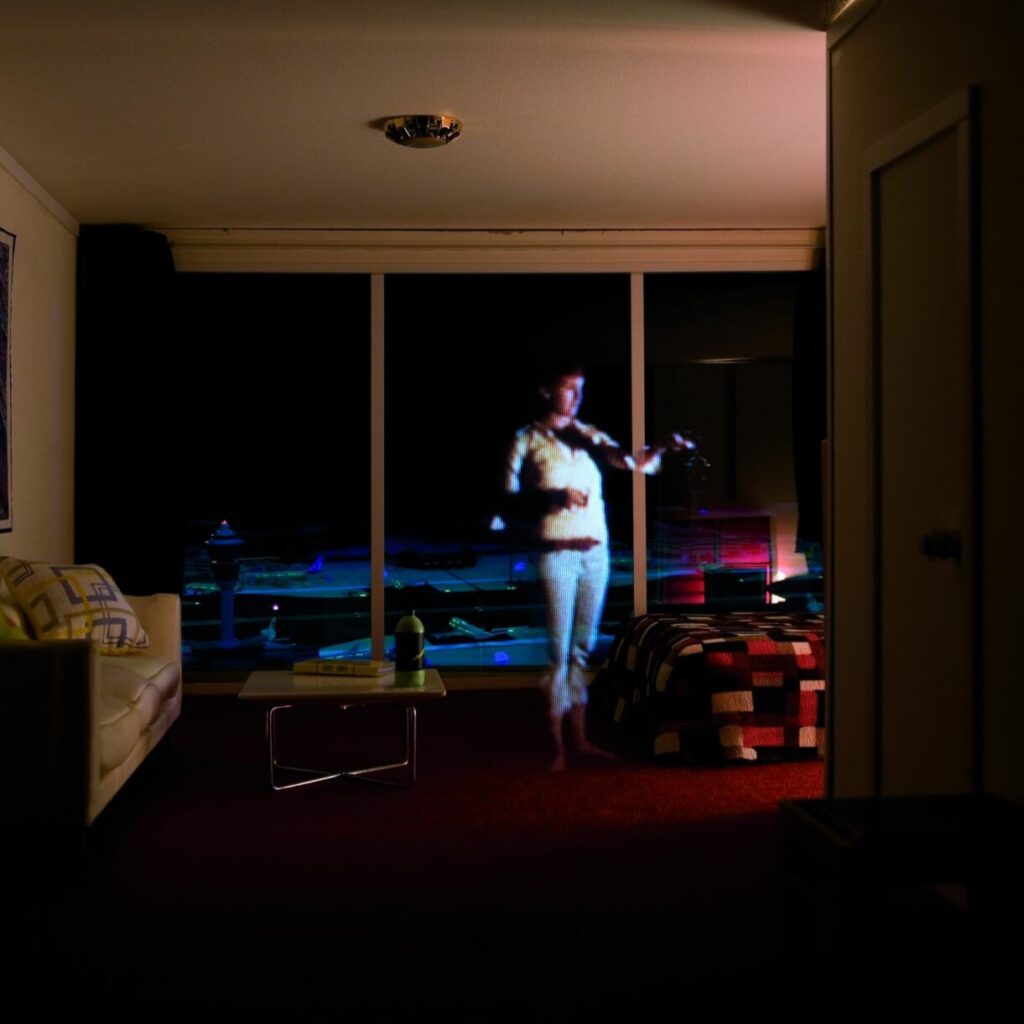
You pass from daylight into the exhibition’s shadow realm through heavy purple drapes. Inside the expansive but crowded gallery, a low cacophony of synthesized music surges. Mysterious mechanical and faint city sounds, distant laughter, and noises from the night woods surround you. As eyes adjust to the dark, a faint glow radiates from muffled television sets.

Dana Claxton’s The Patient Storm

Dana Claxton’s The Patient Storm

Indigenous presence in the popular media is usually a cue to stories of crime, abuse, poverty, loss, fluff and feathers pride, or government sponsored success. And Aboriginal self-representations, when they don’t mirror mainstream narratives, are often self-reflexive tortured recitations on: ‘what does it mean to be Native in contemporary times?’ and ‘how will we ever get over the damage?’ Meta-discourse is instructive but not very inspiring.

Close Encounters

Close Encounters

There may come a day when the idea of an Aboriginal-only exhibition of contemporary art will seem quaint. Quaint because, for example, in a Neo-Modernist future where everyone agrees that art and the individual talent is beyond ethnicity, ‘ghetto’ exhibitions would be considered retrograde.

Appropriate Buddha

Appropriate Buddha

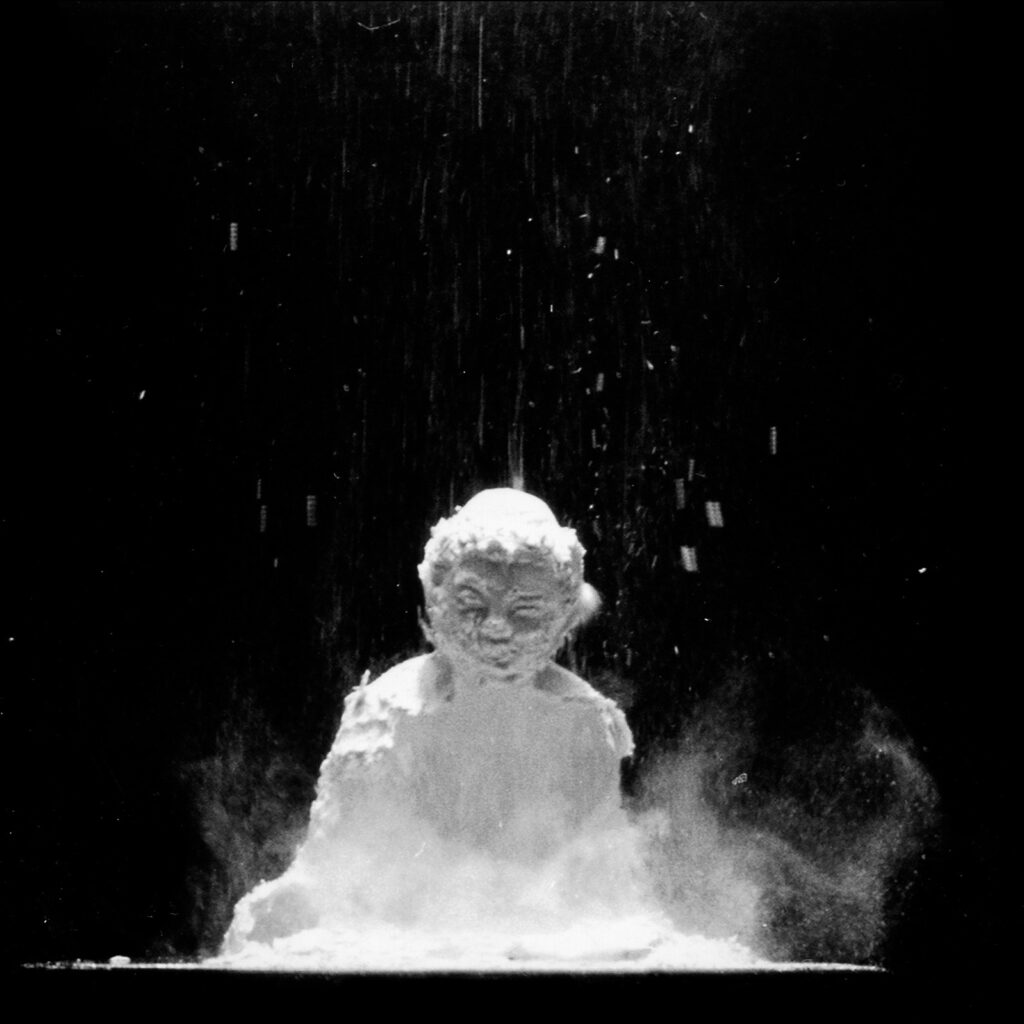
With Lee Henderson. “Appropriate Buddha.” “Blueprint for a New Gravity,” a production still from a video installation of the same name, features a clay Buddha dissolving in water. Fine air bubbles escape and rise from the body, and a front section has broken away. In the video, the grey form softens then slumps and collapses into a mound of settled particles and swirls of diffusing dust. Both are memento mori pictures—we come from clay; we return to clay.

‘Terribly Beautiful’: Joane Cardinal-Schubert’s ‘Intervention of Passion’

‘Terribly Beautiful’: Joane Cardinal-Schubert’s ‘Intervention of Passion’

A Native woman sits on a park bench; her infant son wrapped in a blanket and her arms. A white woman approaches smiles at the scene and declares, “What a cute baby!” “Cute now,” says the mother, “but when he grows up you might not like him so much.”

Michael Campbell, 12,000 YEARS COLLAPSING INTO EIGHT SECONDS

Michael Campbell, 12,000 YEARS COLLAPSING INTO EIGHT SECONDS

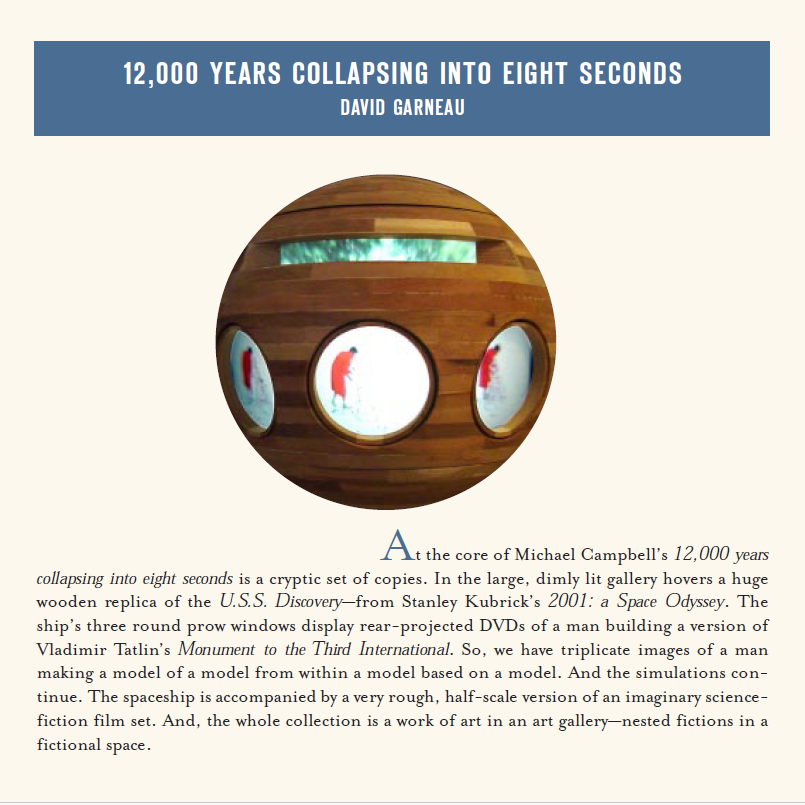
At the core of Michael CampbellÕs 12,000 years collapsing into eight seconds is a cryptic set of copies. In the large, dimly lit gallery hovers a huge wooden replica of the U.S.S. DiscoveryÑfrom Stanley KubrickÕs 2001: a Space Odyssey. m within a model based on a model. And the simulations continue.